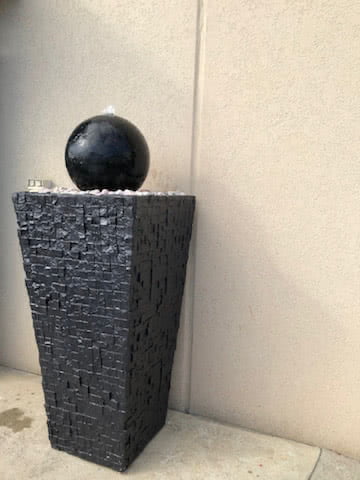
About Stacked Stone Large Water Feature
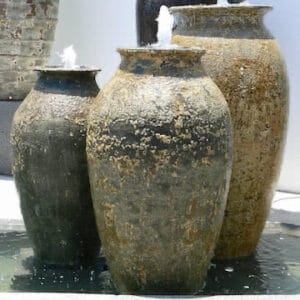
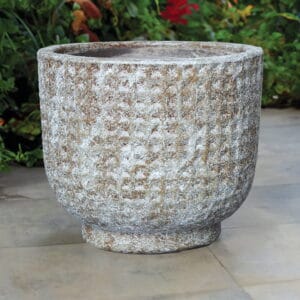
Water sheets down the outside of this urn rather than falling from a spout. The stacked stone texture breaks that film into small separate runs, and the sound follows the surface: a steady wash instead of a single splash. Noise is the reason a lot of these leave the showroom, because a feature this size lays a soft acoustic screen over traffic and neighbour noise in a courtyard without having to be loud itself. The silhouette is still a traditional garden urn, so from a distance it reads as a planted vessel and only resolves into a fountain once you are close enough to see the movement.
There is no plumbing to run. Position it, fill it, plug it in, and the pump handles the rest. Two extras are worth deciding on before delivery: submersible LED lights, which light the cascade from inside the water, and decorative balls that sit over the top outlet and spread the upward stream into a wider ripple across the lip. Compare it against the rest of our water features and fountains range, or contact us about a product or project if you want setup advice or need to know which features are running in the Malaga showroom this week.
Does it need a prepared base?
Yes. Filled with water, an urn this size gets heavy quickly, so give it a level, solid footing — concrete pavers, a poured slab or compacted road-base all work. Level matters for more than stability: if the rim sits out of true, the water runs to the low side and leaves dry patches across the stone face.
What do the decorative balls actually do?
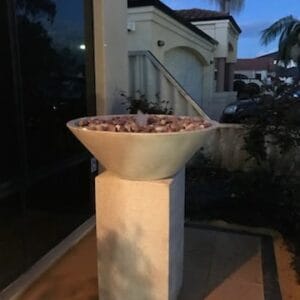
They sit in the top bowl, directly over the water outlet. Rather than the stream pushing straight up and dropping back on itself, the balls push it outward so water spills across the full urn lip — more surface movement, a softer note, and something to look at up close.
Will an afternoon sea breeze blow the water about?
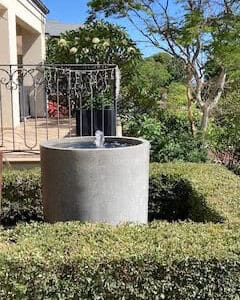
It can. A film of water running down a tall urn is easy for wind to catch, so put something on the prevailing side — a boundary wall, a fence or a garden hedge is usually enough. Keep a paved or pebbled perimeter around the base as well, so anything that blows clear lands on a surface that drains.
What keeps the stone texture clean?
Airborne dust settles down into the crevices rather than sitting on top of them, so a soft nylon brush and a rinse of fresh water clears the face better than a sponge ever will. Dose the reservoir with an aquarium-safe fountain clarifier while you are at it — holding back green algae and mineral scale is far less work than scrubbing either out of a textured surface later.