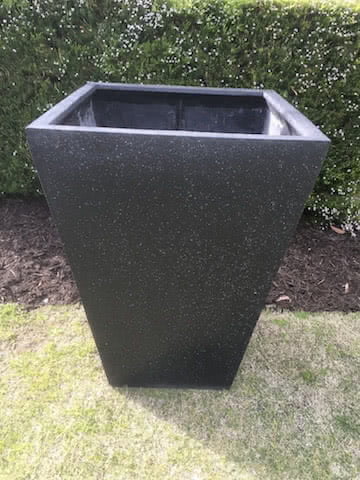
About Wide Taper
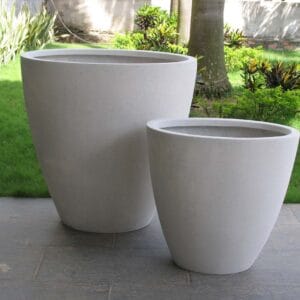
A wide mouth over a smaller base is the whole point of this shape. You get the full planting surface at the top, room enough for a mounded shrub or a layered mixed arrangement, while the walls draw in to a footprint that gives back floor space. In a narrow entry, a busy alfresco run or an interior corner where people walk past all day, that taper is what makes the pot usable rather than something to step around.
Polystone Resin does the work. Moulded composite reads as cut masonry from a metre away but stays light enough to reposition by hand, so a courtyard layout can change after planting without a trolley or two extra pairs of hands. Seasonal rain, a run of warm Australian summer days and daily watering leave the composite as it was — no warping, no breaking down at the rim.
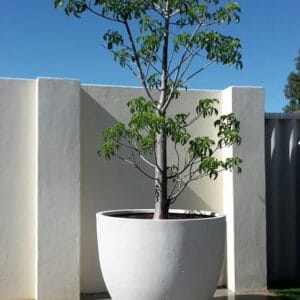
Two sizes share the silhouette: CG5026/90 at 90 x 65 cm and CG5026/69 at 69 x 52 cm. The larger carries a specimen with real height above the rim; the smaller suits flowering displays or a matched pair either side of an entrance. If you want the same stone-look finish repeated in other shapes across a garden, the Polystone Resin collection covers it. Before you buy bags, run the size you have chosen through the potting mix calculator — a tapered pot takes less mix than its top measurement suggests.
Which plants fill a wide mouth like this?
Anything that mounds. Bushy flowering plants and shrubs such as hydrangeas and dwarf gardenias fill the opening properly instead of leaving bare mix on show. Mixed plantings also work here: one upright specimen in the centre, then Dichondra ‘Silver Falls’ or ivy trailing over the rim to soften the taper.
Does it need ballasting in an exposed courtyard?
On a windy site, yes. Because the vessel narrows towards the base, a 10 cm layer of blue metal aggregate or washed river pebbles in the lower third lowers the centre of gravity. Lay a square of permeable geotextile fabric over the stones before the container potting mix goes in, or the mix will work its way down through them.
Can it sit indoors on timber or carpet?
Drop a waterproof plastic saucer into the base and leave the houseplant in its nursery grow-pot. You can lift the grow-pot out to check the roots, and surplus irrigation water stays in the saucer rather than reaching the floor.
Drainage — what goes in before the mix?
Check the base drainage hole is clear of debris first. Sit a piece of synthetic drainage mesh over it so potting media cannot wash out, then fill with a quality container mix matched to the plant you have chosen.
What cleans the smooth composite without dulling it?
The stone-look surface is smooth and closed, so dust and garden splash sit on top of it rather than soaking in. A hose rinse shifts most of it; for the rest, a soft sponge with warm water and a little mild liquid detergent, then dry off any streaks. Wire brushes and solvent-based cleaners will scuff the sheen out of the composite, so keep both away from it.