Outdoor Decor Projects and Planting Advice
Essential Tips for Succulent Care

Succulents come in a wide range of architectural shapes and compact sizes, which makes them a forgiving choice whether you are planting your first pot or filling a courtyard. They are hardy plants, but they still need the right amount of sun, free-draining soil, and measured watering to avoid root rot.
Watering techniques:
top watering and bottom watering
Different succulent varieties have different moisture requirements, but every one of them will rot if left in saturated soil. Two methods work well, and which you choose depends on the plant and the container.
- Bottom watering. Stand the pot in a shallow bowl or tray of water and let the potting mix draw moisture up through the drainage holes. This keeps the foliage completely dry, which helps prevent fungal disease in varieties with delicate or tightly clustered leaves.
- Top watering. Water the soil surface with a watering can or a hose on a gentle flow. Check that the soil has dried out completely before watering again, and make sure excess water drains freely away from the base.
If the potting mix becomes compacted over time, loosen the top layer gently with a hand fork. Water will then soak in evenly instead of pooling on the surface or running down the inside edge of the pot.
Feeding succulents without over-fertilising
Succulents need very few nutrients and do not respond well to heavy feeding. A light, occasional routine is enough to support steady growth.
- Liquid fertilisers. Dilute a balanced liquid fertiliser according to the manufacturer’s instructions and apply it as part of your normal watering cycle.
- Slow-release pellets. Work the pellets into the top layer of soil with a small hand fork. They release nutrients gradually over several months.
Handle succulents carefully during feeding and maintenance. Stems, leaves, and shallow root systems snap easily.
Choosing pots with adequate drainage
Open drainage holes are not optional for succulents. These plants cannot tolerate wet feet or stagnant moisture, so the container has to let excess water escape freely.
Different pot shapes support different planting layouts:
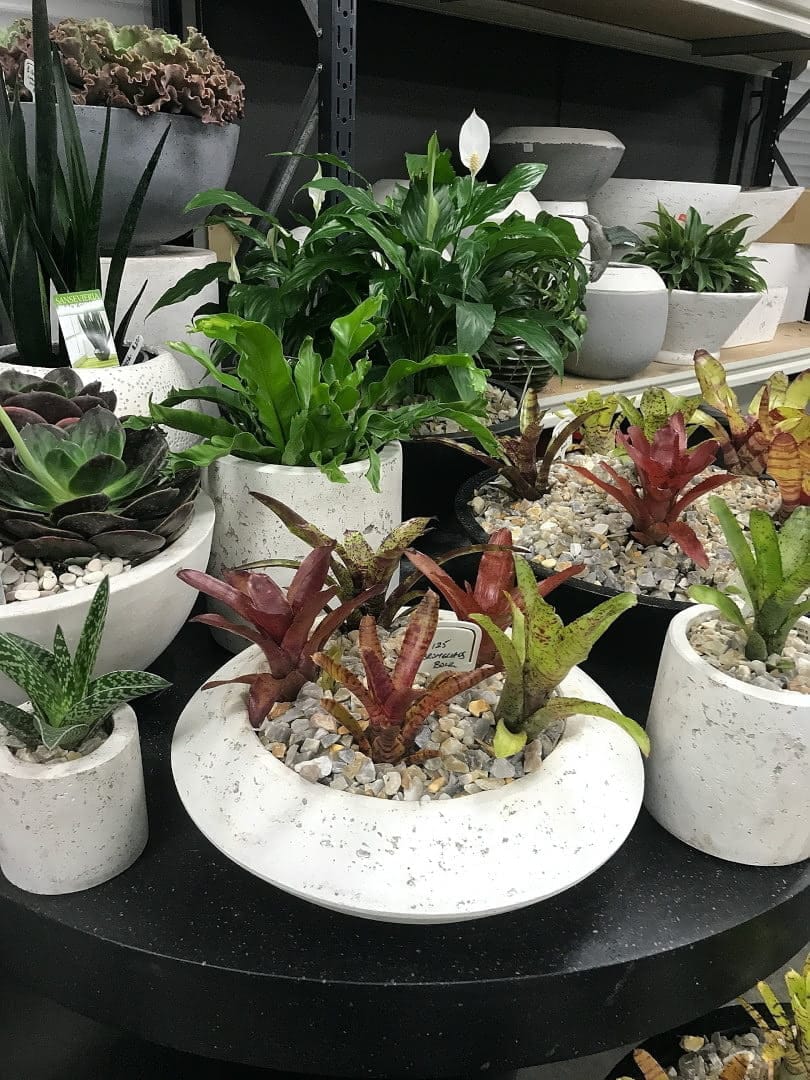
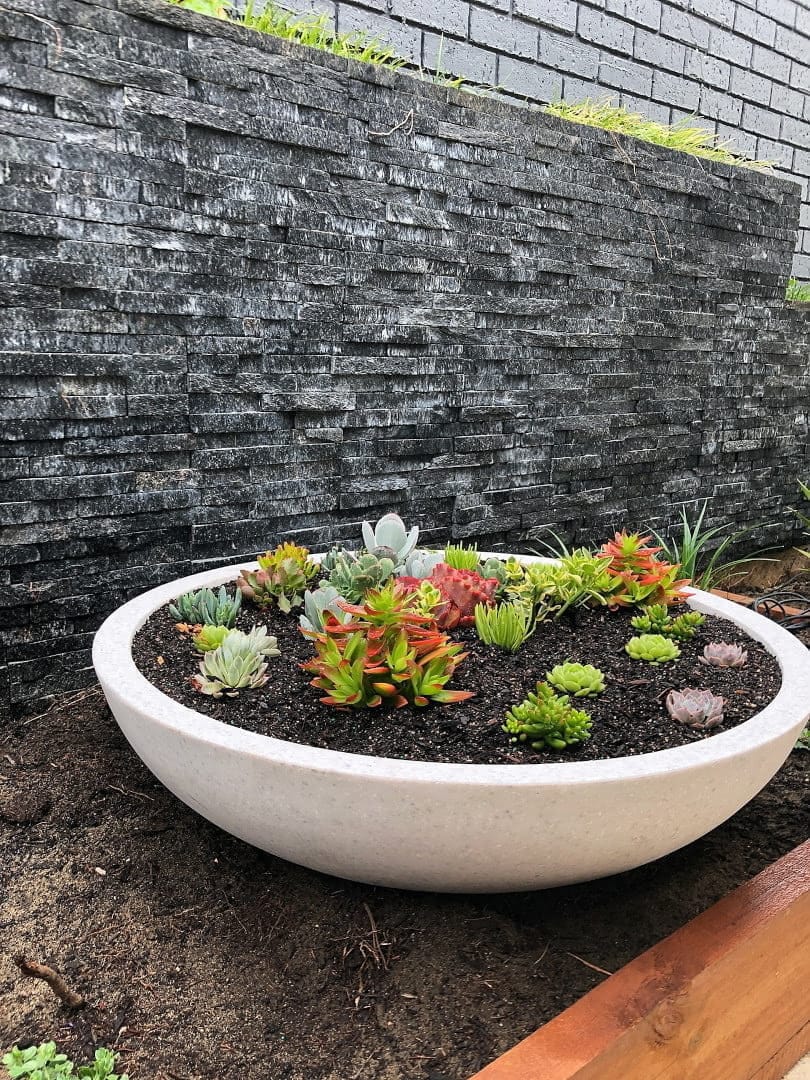
- Succulent bowls. Broad, shallow bowls give you surface area for spreading groundcovers and multi-variety arrangements.
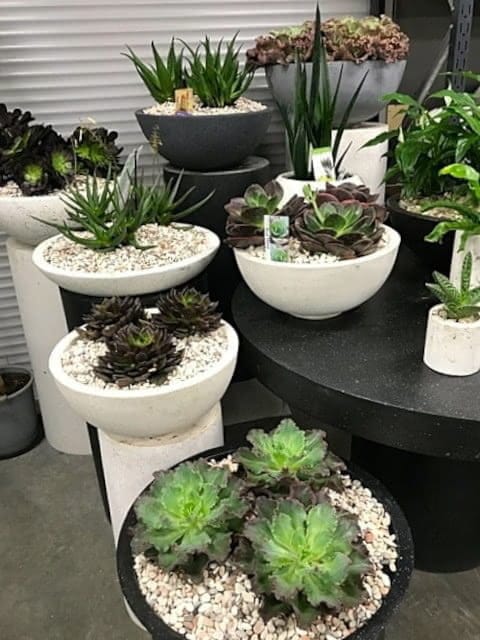
- Grouped planters. Medium containers let you contrast textures and colours in a single display.
- Large pots. Deeper containers take mature specimen succulents with substantial root systems.
Pair your pot with a coarse, free-draining succulent mix and place it where it gets plenty of natural light. To work out how much soil your bowls and planters need, use our potting mix calculator.
How often should you water succulents?
Water succulents only when the soil has dried out completely. Water needs vary with pot size, temperature, and sunlight, so test the soil moisture rather than following a fixed calendar schedule.
What is bottom watering and why does it suit succulents?
Bottom watering means standing the pot in a shallow tray of water so the soil absorbs moisture from beneath. This keeps water off delicate leaves and reduces the risk of fungal problems and leaf rot.
Do succulents need fertiliser?
Succulents do not need frequent feeding, but they benefit from an occasional light application. Use a diluted liquid feed during watering, or work slow-release pellets into the topsoil.
Why do succulent pots need drainage holes?
Drainage holes let excess water escape immediately. Without them, water pools at the bottom of the pot and causes root rot.
Which pot suits an arrangement of several succulents?
Broad, shallow succulent bowls and grouped planters give you the wide surface area needed to arrange several varieties together with room to spread.