Garden Edging Solutions in Perth, Steel & Raised Garden Bed Edging
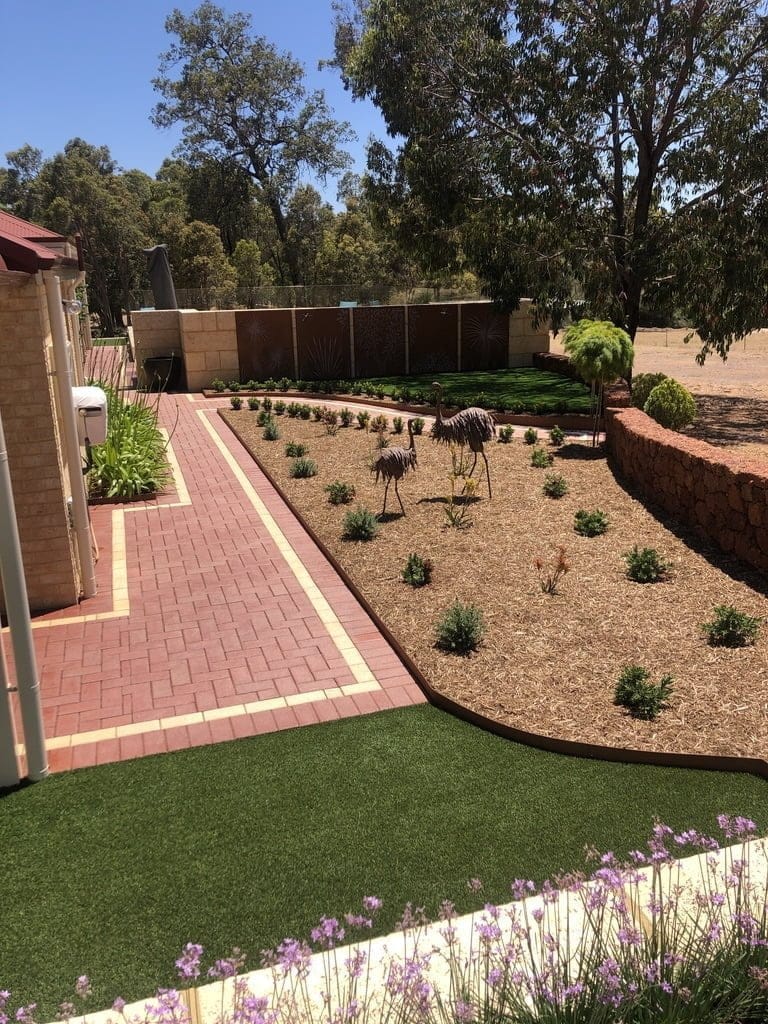
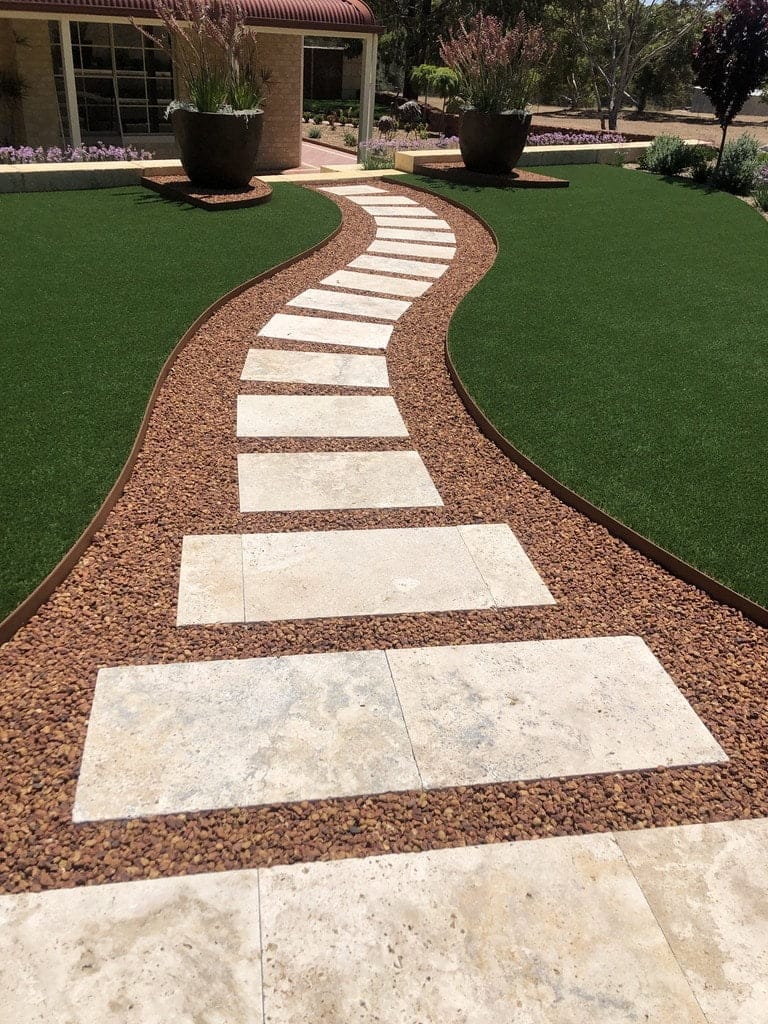
The Outdoor Decor Company supplies Straightcurve garden edging systems in Perth for in-ground lawn borders, above-ground garden dividers, raised planter beds and soil-retaining applications. Crafted from durable weathering steel and engineered for the Western Australian climate, these modular steel edging profiles create clean geometric lines or flowing curves.
Choose the right edging profile for your landscape
Choosing the right garden edging depends on its structural purpose, visible height and soil-retention demands:
- In-ground edging: Sits flush with lawn and turf level to create clean, discreet separation between grass, mulch, gravel and garden beds while preventing grass runners and weeds from encroaching
- Above-ground edging: Sits proud of the ground line to form an architectural boundary between lawn, paving and planted beds
- Raised planter-bed edging: Provides structural height for multi-tiered garden beds, vegetable patches and layered landscape designs
- Retaining edging and walls: Engineered to retain soil on sloping blocks, terraced levels and raised garden beds
Garden edging defines boundaries between lawns, garden beds, paths and gravel areas. The Outdoor Decor Company supplies garden edging in Perth for low borders, visible above-ground edges, raised beds, retaining layouts, curves and straight architectural lines.
Create crisp straight lines or sweeping organic curves
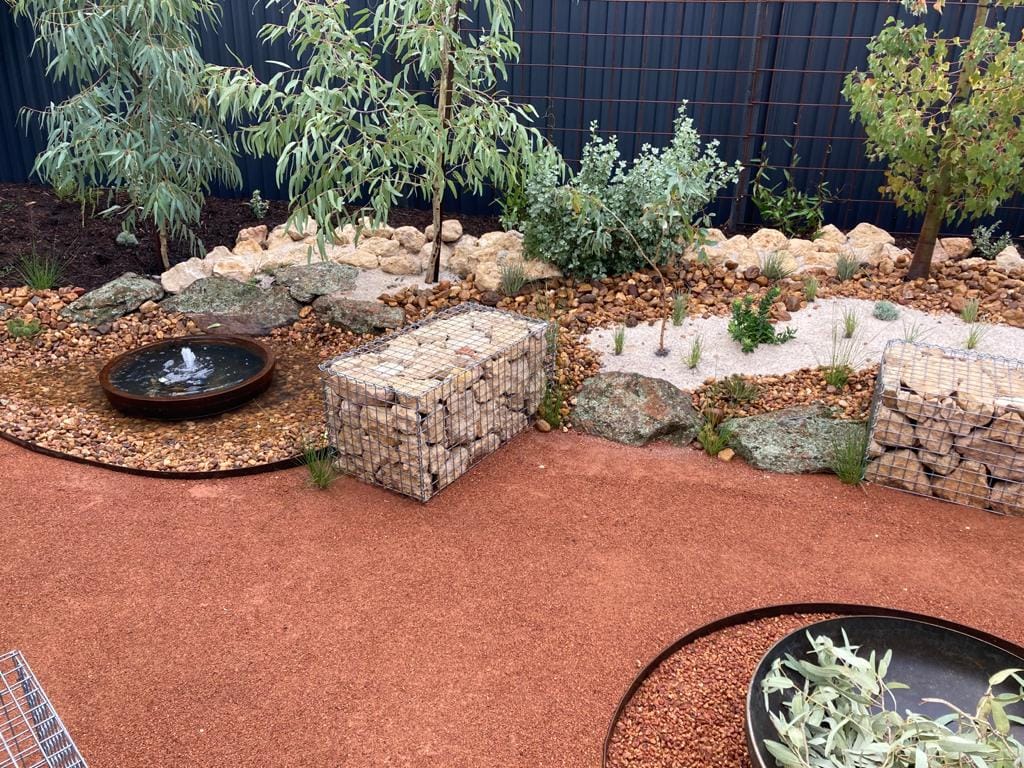
Straightcurve steel edging systems flex smoothly to form organic curves, circles and natural garden shapes, or connect firmly to produce straight, architectural lines. This versatility suits formal courtyards as well as natural landscape designs.
Engineered connector plates and steel edging stakes anchor the system securely into the sub-base, ensuring upright stability and clean alignment even across uneven ground, sandy Perth soils and sloped terrain.
Weathering steel durability and natural patina
Weathering steel contains specialised alloy compositions that form a stable, protective outer rust patina upon exposure to Perth weather. This natural patina seals the underlying steel from further degradation without requiring paint or chemical treatments, pairing naturally with mulch, gravel, paving and foliage.
The same 100 mm galvanised profile is used to retain the pebble bed around our Atlantis Urn water feature.
Visit our Malaga showroom at 65 Holder Way to compare Straightcurve steel edging profiles, heights and joining hardware in person.
Edging is one of 13 ranges on the floor; browse the full garden decor collections.
What is Straightcurve garden edging?
Straightcurve is a modular metal garden edging system available in weathering steel. It is engineered to create straight borders, flowing curves, raised garden beds and retaining walls for residential and commercial landscaping.
What is the difference between in-ground and above-ground steel edging?
In-ground edging is installed nearly flush with the turf to prevent grass runners and separate lawn from garden beds discreetly. Above-ground edging sits higher to establish a distinct visual border and contain mulch or gravel.
How does weathering steel hold up in Perth weather?
Weathering steel develops a dense, self-protecting rust patina when exposed to outdoor conditions. This natural layer seals the steel core against corrosion and requires no painting or ongoing chemical maintenance.
Can Straightcurve steel edging be shaped into curves and installed on slopes?
Yes. Straightcurve profiles bend smoothly to form flowing curves and circles, and can be installed across uneven or sloping ground using dedicated anchor stakes and joiners.
How does steel edging help reduce garden maintenance?
Steel edging establishes a permanent barrier against invasive grass runners and weed encroachment, keeping mulch and soil contained within garden beds and reducing lawn trimming time.
Where can I view Straightcurve edging in Perth?
You can inspect Straightcurve profiles, joiners and raised bed configurations at The Outdoor Decor Company showroom located at 65 Holder Way, Malaga WA.