About UV-Protected Drum Cylinder
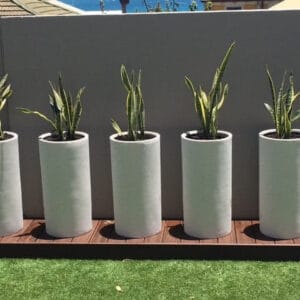
Straight sides from base to rim are the whole point of this shape. A drum holds more mix for the ground space it takes up than a tapered pot of the same rim diameter, which means real root depth rather than a shallow dish of potting media — useful for deep-rooting shrubs, ornamental grasses and architectural foliage. Five graduated sizes run from 20 x 20 up to 60 x 60.
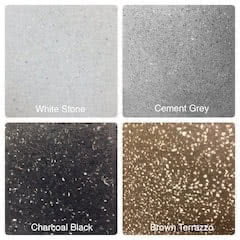
Two compositions, identical dimensions. Polystone Resin comes out smooth and matte; Light Stone carries a granular mineral texture closer to dressed stone. Both leave the factory with a UV-protective coating on the outside, which is what lets them stand on an open veranda through a Perth summer instead of chalking back. Sheltered patio, open veranda or inside the house — all three are fair placements.
If you want the same idea in a taller, narrower silhouette, compare this one with the Cylinder Planter before you decide. Once the size is settled, work out what you will need to fill it with the potting mix calculator — the step up from 40 x 40 to 60 x 60 costs more bags than it looks like on paper.
Common questions
Which surface works better, Polystone Resin or Light Stone?
Run a hand across both and the choice usually makes itself. Polystone Resin is smooth and matte, which suits rendered walls and modern entries. Light Stone is granular, close to dressed stone, and it hides dust better. Dimensions are the same in both, and both get the same UV treatment on the outside, so this comes down to surface only.
Will roots cook in one of these on hot paving?
Less than you would expect. The composite walls on both the resin and the Light Stone are dense enough to slow heat transfer in a way thin unlined plastic cannot, so the root zone holds a steadier temperature when the pot sits in direct sun on a paved patio. The difference shows up by mid-afternoon.