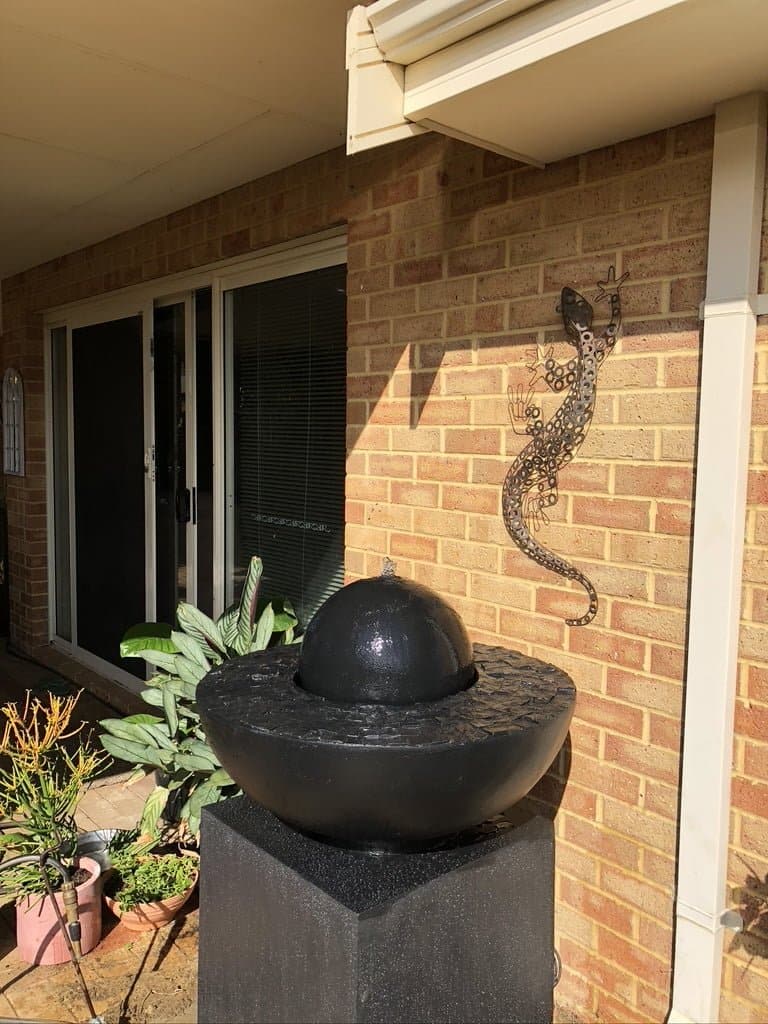

About Millstone Water Feature
Water sheets across the textured face of the disc and returns to the reservoir below. That is the entire mechanism, and it is the reason this feature works in courtyards where a tiered fountain would eat the floor: only 40 cm of width, and the sound comes from the film of water on the face rather than from a drop into a basin. We build the shell in-house from marine-grade fibreglass, so it holds water, takes Perth sun without cracking, and stays light enough to move by hand. The face carries the cut-stone texture of a millstone.
At 89 cm high, set directly on level paving, you look slightly down onto the water. Put it on a plinth and the waterline lifts closer to seated eye level, which is usually the better call beside an outdoor table. The plinth shown is our 60 x 60 x 60 cm Polystone Resin unit, available separately, and other plinth dimensions can be made to match the scale of the bed or terrace it stands in. If you want the base to read with the rest of the pots on the paving, the polystone resin planters range is the same material. Contact us about a product or project to settle on a plinth height, or to see the millstone running in the Malaga showroom before you commit.
Does the plinth need a prepared footing?
Set the plinth on something firm and level, such as a concrete slab or solid masonry pavers. Level is the part that matters most: a round face will pick up a lean of even a few millimetres and send the water down one side instead of sheeting evenly around the full circumference.
Why build a water feature in fibreglass rather than cast stone?
Marine-grade fibreglass gives a watertight shell in one piece, and it takes UV exposure and the daily heat-and-cool cycle without cracking. You get the read of masonry with a tare weight two people can handle, which decides whether the feature reaches a rear courtyard or stops at the side gate.
Perth mains water leaves white marks. How do you keep them off the face?
Hard tap water leaves a pale mineral ring at the waterline. The fibreglass is non-porous, so a soft cloth and fresh water lift those marks easily provided you do it before they harden into a crust. Treat the reservoir water with a fountain conditioner to slow the scaling and keep algae down. Keep scouring pads away from the textured face, which traps grit and scratches.
How often will it need topping up in summer?
An open face loses water quickly on a hot Perth day, and a breezy afternoon carries off more again. Check the level every two to three days through warm weather. The pump impeller has to stay fully submerged; run it dry and you will be replacing the pump, not topping up the reservoir.