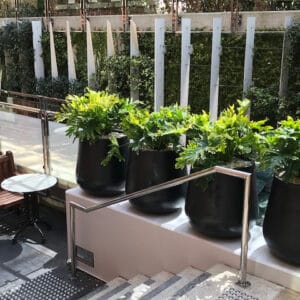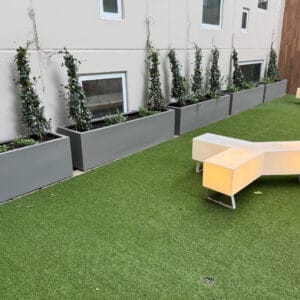
About Tall Square Planters
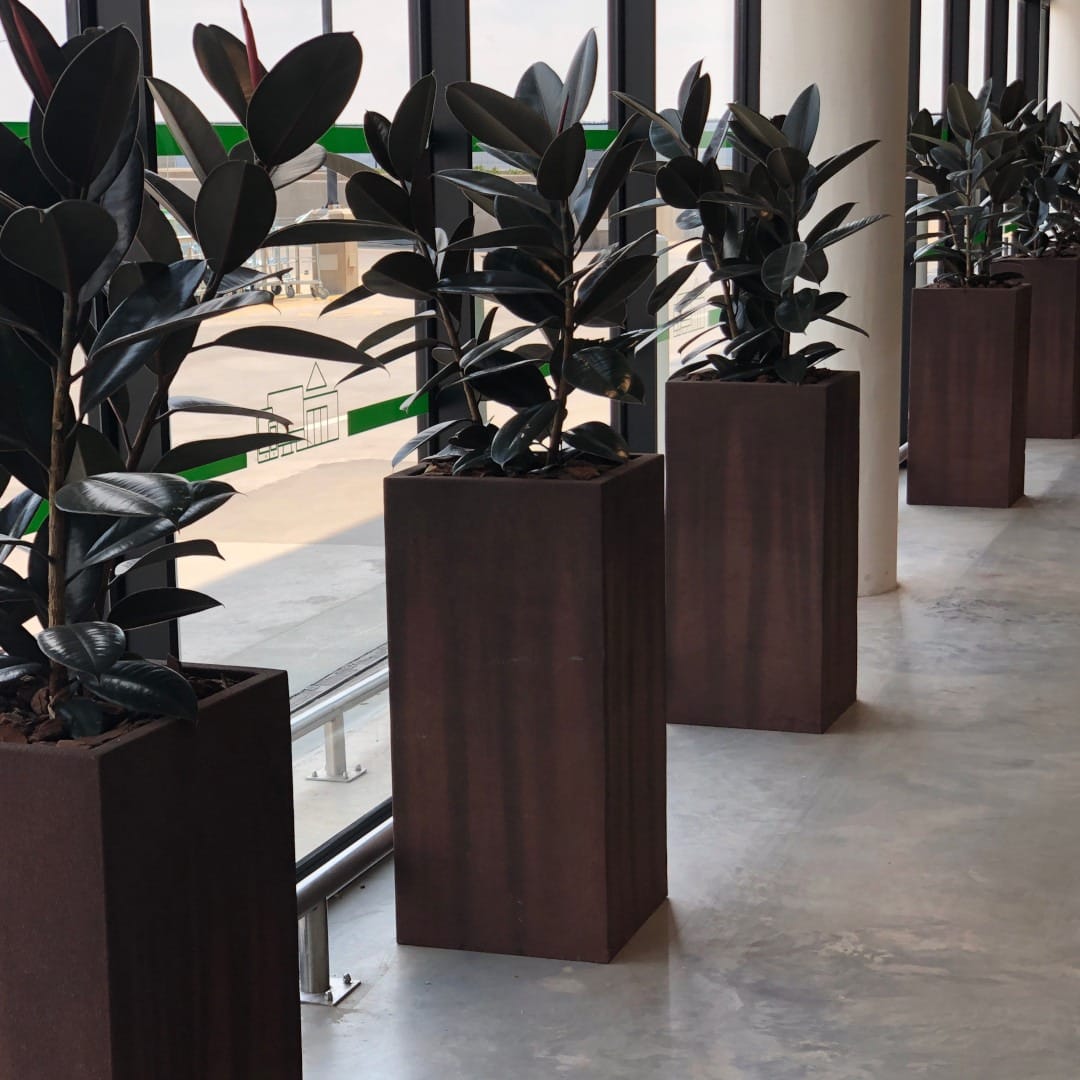
Flat sides, square in plan, taller than it is wide: the geometry is the reason this one gets specified. Office towers, hospitality dining precincts and private courtyards all need planting that reads vertically without stealing walkway width, and an upright square does that in a way a bowl or a tapered pot cannot. It frames a formal entry, or marks the edge of an outdoor dining area, without crowding either.
The brown finish is deep and low-key. It sits against timber decking, off-form concrete and most stone paving rather than competing with them, which matters when the planting is meant to be the thing you notice. There is real room inside for seasonal flowers, a dense foliage screen, or an established small feature tree, and the planting can be swapped as a venue's styling changes without the container looking out of place.
One thing to be clear about: this brown listing carries no published dimensions. For the Polystone Resin tall square range and its documented CG-series sizes, see the Tall Square Planter.
Other containers built for the same kind of site sit in the Commercial Planters range. For trade quotes, or to see what is on the floor in Malaga, contact us about a product or project.
Which plants suit an upright square container this tall?
Structured trees and shrubs earn their keep here: bay laurel, ficus or olive trees. For layered commercial plantings, set something upright in the middle such as snake plants or bamboo palms, then let ivy or dichondra trail over the rim.
Setting one up outdoors, what does the drainage need?
Check the base drainage opening is completely clear before anything goes in. Lay synthetic drainage mesh across the outlet, add an 8 cm to 10 cm layer of coarse drainage aggregate, then fill with a quality commercial container potting mix matched to your plant selection.
Do these need ballast before a small tree goes in on a windy site?
On exposed urban forecourts, yes. A dense 10 cm bed of blue metal aggregate in the base puts weight where you want it, low down, and drops the centre of gravity enough to stop an upright vessel shifting or tipping when the wind funnels through.
Can it be used inside on timber or polished stone flooring?
It can, with one precaution. In corporate foyers and restaurants, leave plants in their original nursery grow-pots and install an impermeable internal saucer or pond liner at the base. Surplus water from watering is then caught before it ever reaches timber, carpet or polished stone.
Keeping the brown finish looking right: what is the routine?
A soft sponge, warm water and mild detergent every so often. Dust and rain-splash marks show on a mid-brown surface, and both lift off easily while they are fresh, so wipe the external panels down and dry them rather than letting drips sit. Keep scouring pads, bleach and solvent-based cleaners off it entirely; they dull the brown finish and there is no coming back from that.