About Succulent Low Rise Bowls
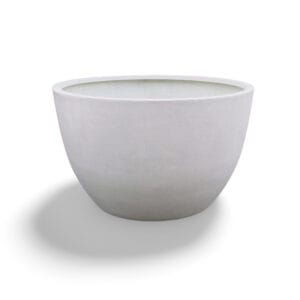
Width does the work here, not height. The largest bowl measures 64 cm across and stands only 16 cm tall, so the planting sits close to whatever surface it occupies, whether that is an alfresco dining table, a low retaining wall or a sunny window ledge. Succulents, cacti and spreading moss read as a collection laid out for viewing from above rather than a plant in a pot.
Polystone Resin keeps the weight manageable. One person can lift and shift even the 64 cm bowl, which matters while you are still working out where a display belongs, and it is the reason these move so easily between a courtyard and an indoor table. The exterior takes routine garden watering and weather exposure without losing its outline.
Four sizes share one profile: CG5015/64 (64 x 16), CG5015/54 (54 x 13), CG5015/44 (44 x 11) and CG5015/34 (34 x 9). Three of them stepped down in size read well along the centre of a long table, while the 64 x 16 carries a setting on its own. Caesar Stone White, Charcoal Black and Cement Grey each take a different cue from the paving around them. A shallow bowl in full Perth sun dries out faster than a deep pot, and watering is where most succulent displays come undone, so start with the succulent care guide. If you are weighing up sizes or drainage for a particular spot, talk to us about a product or project.
Common questions
Mixed planting in the 64 x 16 or 54 x 13 — what goes where?
Set the tallest specimen off-centre first, an Aloe vera or Crassula ovata, so the arrangement has one point of height. Rosette formers fill in around it: Echeveria, Sempervivum and Haworthia. Finish at the perimeter with a trailer such as Senecio rowleyanus, which breaks the hard line of the rim as it spills over.
How do you set up drainage in a bowl only 9 to 16 cm deep?
Check the hole in the base is clear, then cover it with a small disc of synthetic mesh or geotextile so the mix cannot wash out. There is no depth to spare for a gravel layer, so the potting mix itself has to do the draining: use an open, coarse succulent blend with perlite or coarse grit through it. A top dressing of horticultural pebbles stops splashback marking the rim.
Will these mark an outdoor table or timber deck?
On dining tables, timber decking or a stone coffee table, stick small adhesive rubber pads under the base ring. The pads hold a slight air gap between bowl and surface, which keeps the tabletop free of scratches and lets drainage water run away instead of sitting underneath.