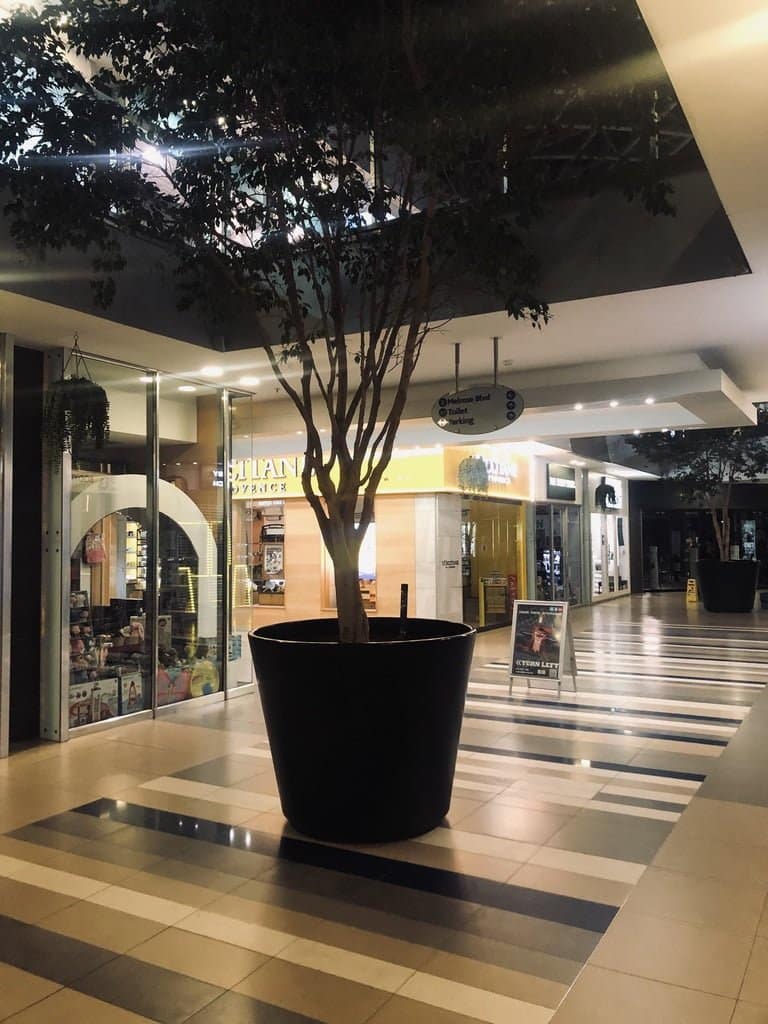
About Jozi Planter
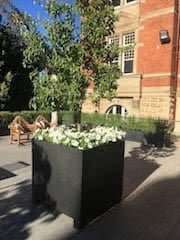
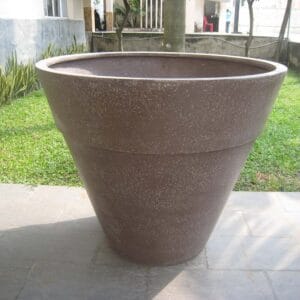
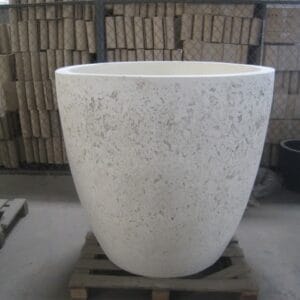
A planter of 150 x 130 holds enough soil for a mature ornamental tree or a large palm to sit in without its roots being cut back to fit. That is the reason the Jozi exists. We see it specified on commercial developments, residential garden courtyards and civic landscaping jobs, where a smaller container would look under-scaled against the building and starve the plant besides.
High-grade reinforced fibreglass carries the structural load while keeping tare weight well below cast concrete of the same size, and at this scale that changes the whole installation. Rooftop terraces, balconies and indoor commercial foyers come back into play, and positioning the empty vessel becomes a matter of a small crane or a few sets of hands rather than an engineered lift.
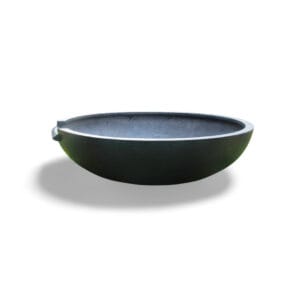
Going inside? Order the optional matching saucer with it. The saucer sits directly under the base and catches drainage overflow before it reaches finished timber or stone. Work out your media volume on the potting mix calculator before delivery day, because filling one of these takes more mix than most people budget for, and contact us about a product or project if you need to talk through Perth site delivery and access.
Which plants earn a 150 x 130 planter?
Mature olive trees, frangipanis and dwarf date palms all sit comfortably in it, as do dense groupings of strelitzia and fiddle-leaf fig. Depth is the part that counts here: a deep taproot gets room to run straight down rather than circling the base of a shallow pot.
What goes in the bottom before the soil?
Cover the base drainage outlets with heavy-duty synthetic mesh, then build up a 15 cm to 20 cm layer of coarse blue metal aggregate or washed river stones. Lay permeable geotextile fabric over the aggregate before the professional container potting soil goes in — that keeps the drainage passages open instead of letting soil work down and compact into them.
Does a tall tree need ballast in an exposed position?
Yes, and the drainage layer can do that job as well. Load 100 kg to 150 kg of coarse blue metal into the bottom and the centre of gravity drops, which is what holds a tall canopy steady when a gusty coastal afternoon sets in.
Is the saucer worth ordering for an indoor install?
If the planter is landing on timber, polished concrete or carpeted commercial flooring, yes. The optional matching saucer sits directly beneath the base and captures excess irrigation runoff, so you can water the plant properly instead of watering it sparingly to protect the floor.
Does the fibreglass surface need anything beyond a wash?
Very little. Fibreglass is sealed and non-porous, so airborne dust and coastal salt film settle on the surface rather than soaking in. Rinse the external walls down, go over them with a soft sponge, warm water and mild detergent, then dry off any runs with a cloth so they do not dry as rings on the finish. Keep abrasive pads, bleach and solvent cleaners well away — they cut into the outer finish coat, and a dulled patch cannot be brought back.