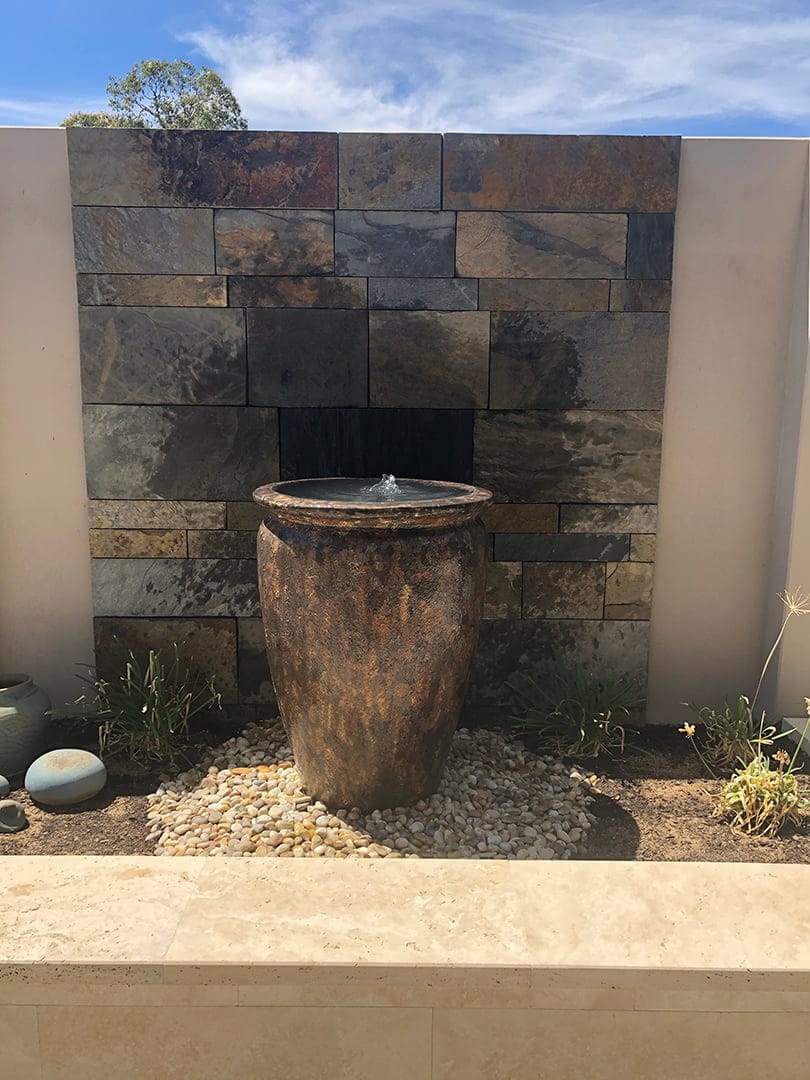
About Rome Water Feature
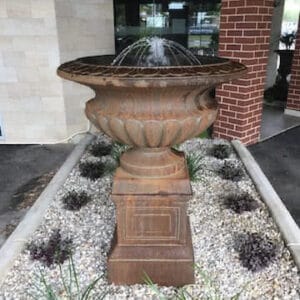
Water wells up through the top of the urn, runs evenly down its outer walls, then disappears through a layer of decorative pebbles into a 670W x 350H basin buried below. There is no visible tank and no pond edge, so the classical urn silhouette stays intact and the movement is the only clue that a reservoir is there at all.
Inside the basin sits a plinth, and it takes the full weight of the urn once the pottery fills with water, so no load ever rests on the reservoir lid. A built-in trap door lets you lift the pump out for an intake rinse without touching the urn. LED lighting can be added to wash the water film after dark. Where excavation is impractical, a paved courtyard or a slab with no depth to give, the same feature can be configured to run entirely above ground.
The same profile without the water is the Rome Planter, in high-fired terracotta. If you are weighing the recessed basin against the above-ground build, take a photo of the spot and contact us about a product or project — the site almost always settles the question for you.
What does the excavation for the 670W x 350H basin need?
Dig wide and deep enough to house the 670W x 350H basin, then bed the floor on 50 mm of compacted bedding sand. Level the basin with a spirit level and check it a second time before backfilling. That one step decides whether the water sheets evenly around every side of the urn or favours the low edge.
Why does the urn sit on an internal plinth rather than on the basin lid?
The plinth stands on the basin base and carries the weight of the pottery and its water straight down into the compacted ground beneath. Left on the decorative basin lid, that same load would eventually make the lid sag or crack.
Can the pump be reached without lifting the urn?
Yes. The basin top has an integrated hatch. Brush the river pebbles off the door, lift the inspection lid, and the submersible pump comes out for an intake rinse with the urn still in place.
How often does the underground reservoir need topping up?
Weekly through a hot Perth summer. Look through the access hatch or test the water depth, then top up with a garden hose straight over the pebbles until the pump is fully submerged again.