About URN011B Classical Urn
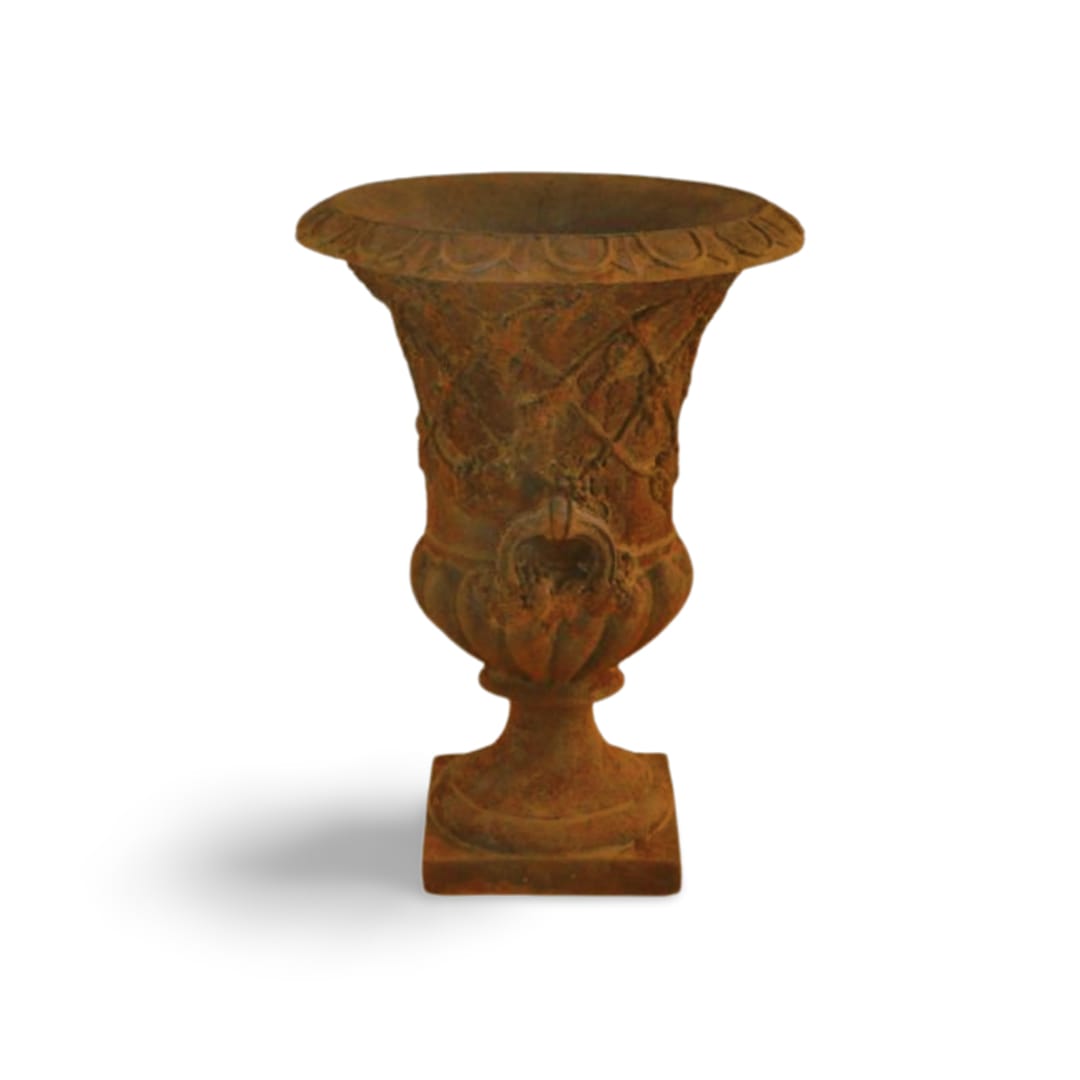
At 1200 mm tall with an 800 mm flared rim, this urn is sized to hold its own beside a double-height portico. Scale is the thing most people underestimate: they buy a 600 mm pot for a tall entry, then wonder why it disappears next to the front door. Stood singly, the URN011B anchors a driveway turning circle. Used as a pair, it frames entrance steps without narrowing the walk.
The body is layered marine-grade fibreglass, not wet-cast concrete and not terracotta. It will not spall through a wet winter, degrade under years of UV, or crack from temperature shifts. And because the wall is composite rather than masonry, you can move it yourself when the garden changes its mind — no crane, no rigging crew, no two-day booking.
The rust finish is worth understanding before you place it. It reads as the warm, oxidised texture of cast iron, but it is bonded to an inert fibreglass shell — there is no ferrous metal anywhere in the piece, so nothing weeps orange streaks down travertine, limestone pavers or light aggregate concrete. That single detail decides whether an aged-iron look is safe on pale paving. View the urn collection if you are matching profiles across a formal bed.
A 1200 mm urn in a breezy coastal corridor needs its weight low down. Put 15 to 20 kg of coarse drainage gravel in the base before any soil goes in, then backfill; the lower centre of gravity is what keeps the vessel sitting where you left it. Filling the whole cavity takes real volume, so work the figure out on the potting mix calculator before you order media — or fit an internal root baffle and plant the top half only.
Exactly how large is the URN011B?
800 mm across the outer rim, 1200 mm high, quoted as 80x120H. That height is the reason to choose it: the urn holds its line beside double-height entry porticos, tall gates and mature perimeter hedges, where a shorter vessel simply gets swallowed.
Does the rust finish stain pale limestone paving?
No, because nothing in the piece actually rusts. The finish is a surface treatment applied over non-corrosive marine fibreglass, so there is no iron oxide runoff to leach onto limestone, travertine or liquid limestone pool surrounds.
Ballast and drainage in an exposed Perth garden — what actually works?
Screen the bottom drainage holes with fibreglass mesh, then lay in a 100 mm layer of 20 mm blue metal aggregate. It does two jobs at once: water clears fast through heavy winter rain, and the 15 to 20 kg of aggregate anchors the base when the Fremantle Doctor comes through in the afternoon.
What volume of potting mix does a full planting take?
Roughly 180 to 220 litres to fill the full cavity, depending on how deep you run the drainage gravel. If that much soil weight is a problem, suspend a false floor or a heavy-duty nursery pot insert in the top half and plant seasonal colour into that instead.
Can it go indoors or onto timber decking?
Yes. The dry tare weight of fibreglass is low enough for weight-sensitive timber balconies and indoor entrance foyers. Inside, check the base is sealed and sit the urn on an internal saucer so surplus irrigation water has somewhere to go.