
About Polystone Resin LUMA Planter
Height does the work here. At 51 x 60 the largest LUMA claims far less paving than a wide bowl of the same visual weight, which is what matters on a patio where the walkway is already tight, or in an entrance foyer where the door has to swing. The base is flat and broad instead of tapered, so it sits level on pavers without rocking and without needing a pot foot underneath.
Polystone Resin is a composite, and it behaves like one. The cast surface carries the grain and colour depth of natural masonry, but the planter is light enough to reposition on your own once it is planted out. Seasonal rain, high summer heat and daily watering will not swell, warp or split it, so the same container works in an open courtyard and under an alfresco roof.
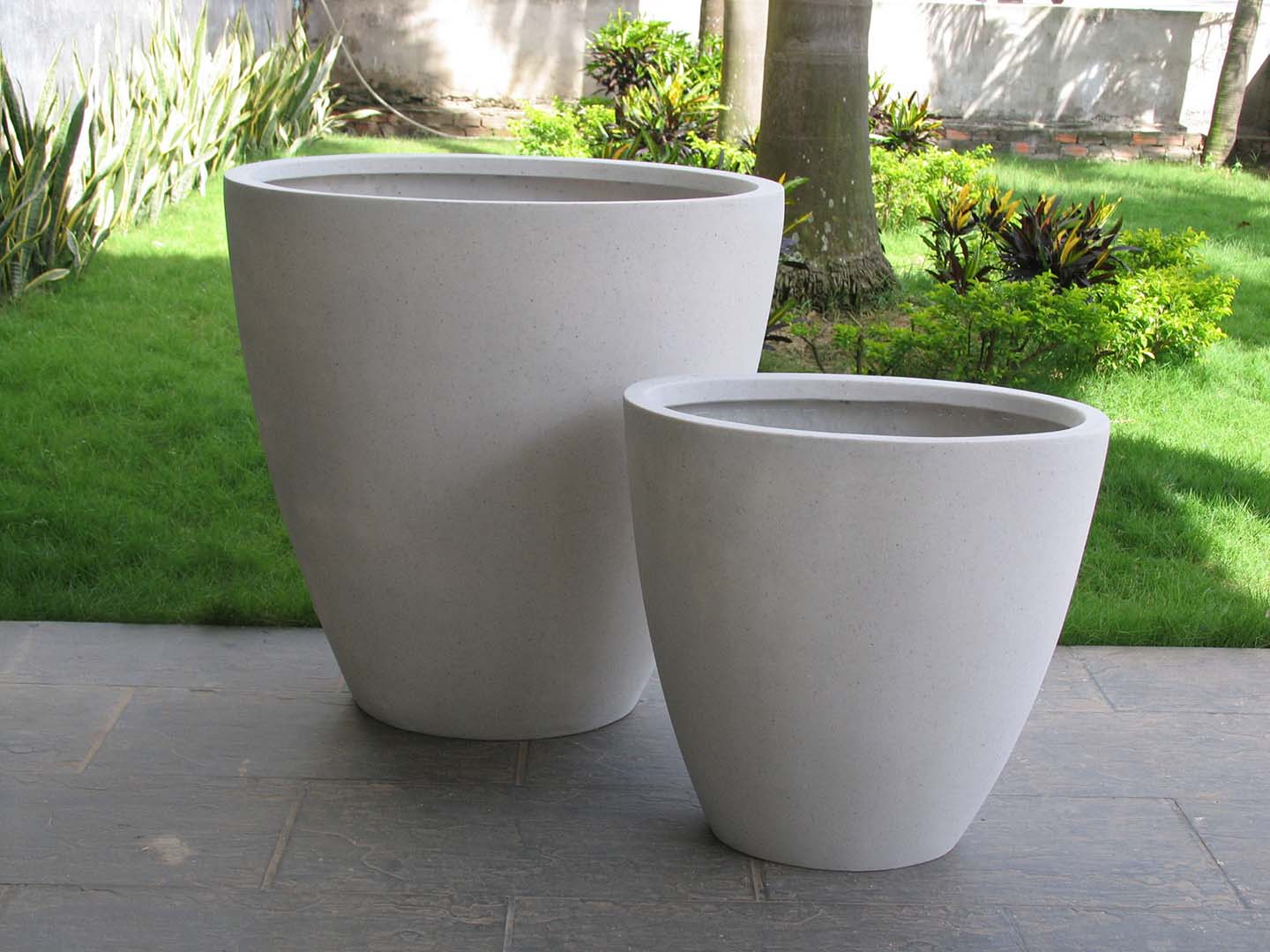
The three sizes were drawn to be grouped. Set the 51 x 60 at the back, bring the 44 x 50 half a step forward, drop the 35 x 40 into the foreground, and you get three foliage heights out of one material. Cement Grey, Stone White and Charcoal Black each sit quietly against render, limestone and dark cladding rather than competing with them. See the rest of the Polystone Resin Planters collection, or contact us about a product or project if you want the sizes checked against your space before ordering.
Which plants suit a container taller than it is wide?
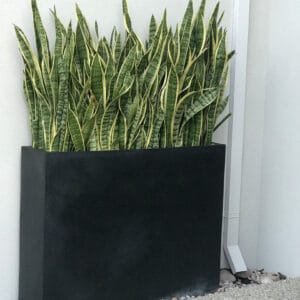
Upright, structural foliage that carries on the line the container starts: Sansevieria, Dracaena, fiddle-leaf figs, slender bamboo palms. Outdoors, plant one upright specimen and let trailing dichondra or cascading ivy break over the rim — the height graduation then reads from the other side of the garden.
Where does each size go in a group of three?
Largest to the back. The 51 x 60 takes the rear or the corner, the 44 x 50 steps forward to one side, and the 35 x 40 sits in the front foreground. Stagger the three on a triangle rather than a straight line: it gives the arrangement depth and keeps natural light reaching foliage at every level.
Does the drainage hole need preparing before planting?
Check the base hole is clear of packing debris, then cover it with synthetic drainage mesh or a square of geotextile fabric so the potting media cannot wash out the bottom. Fill with an open-draining mix matched to the species going in.
Can it stand on floorboards or carpet indoors?
Yes, provided something sits between the soil and the floor. Drop your grower pot into an internal plastic liner, or stand it on a waterproof drip saucer inside the planter. You water as normal, and no moisture escapes onto boards, carpet or tiles.
What keeps the Polystone Resin surface looking as it did in the showroom?
The cast stone texture traps fine dust in its grain, so a dry brush does more than water on the first pass — a soft bench brush lifts it straight out. Follow with fresh water and a little mild biodegradable detergent to take off garden splash and watering marks. Keep abrasives away from it: scouring powders and steel wool burnish the matt grain into shiny patches that cannot be brought back, and solvent cleaners have no business near a resin composite.