

About Large Box Planters
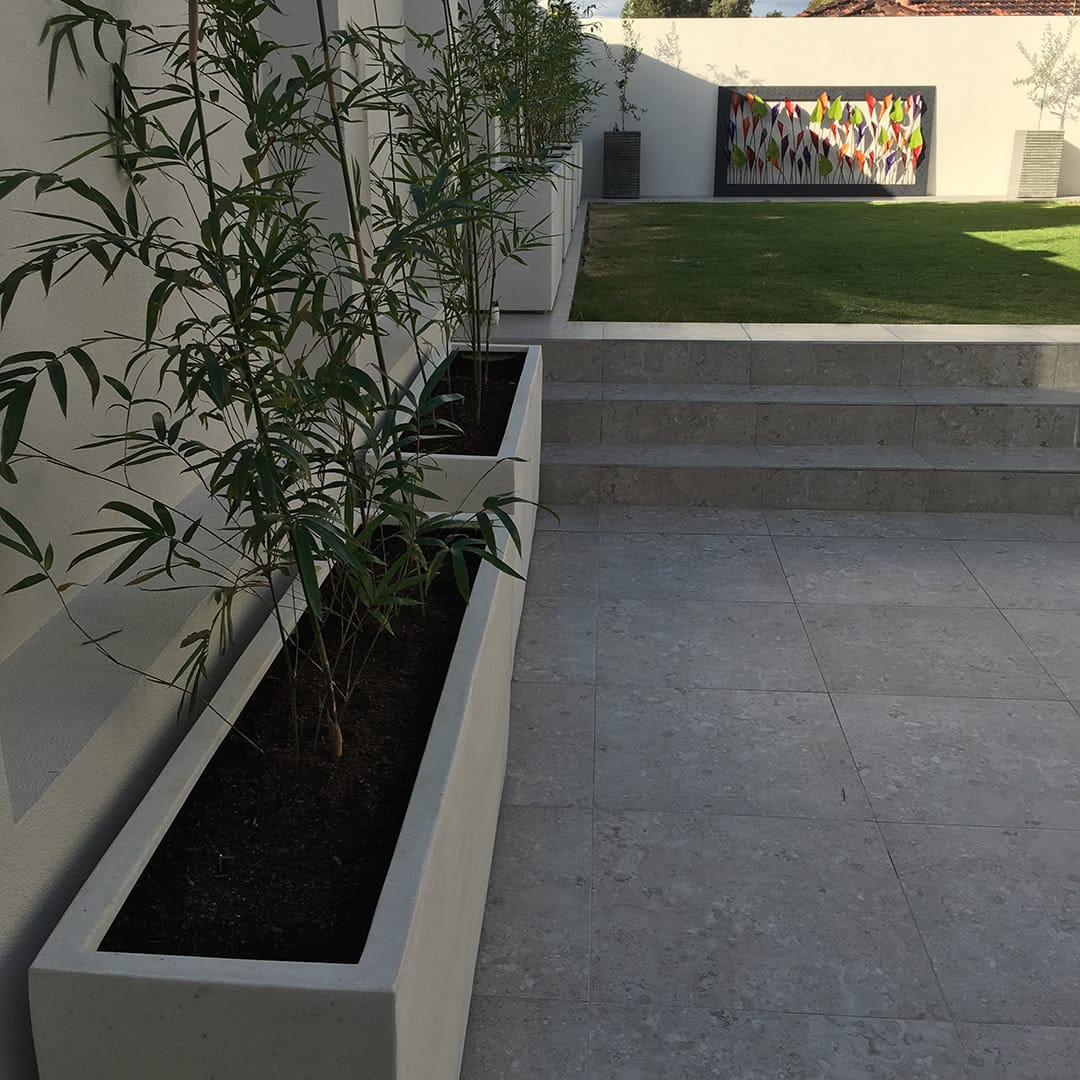
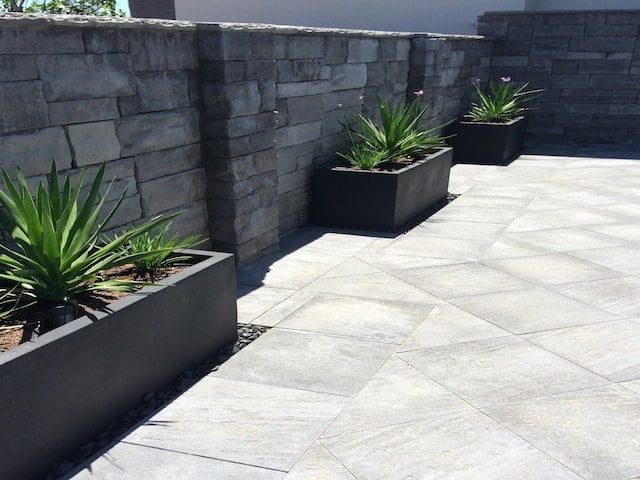
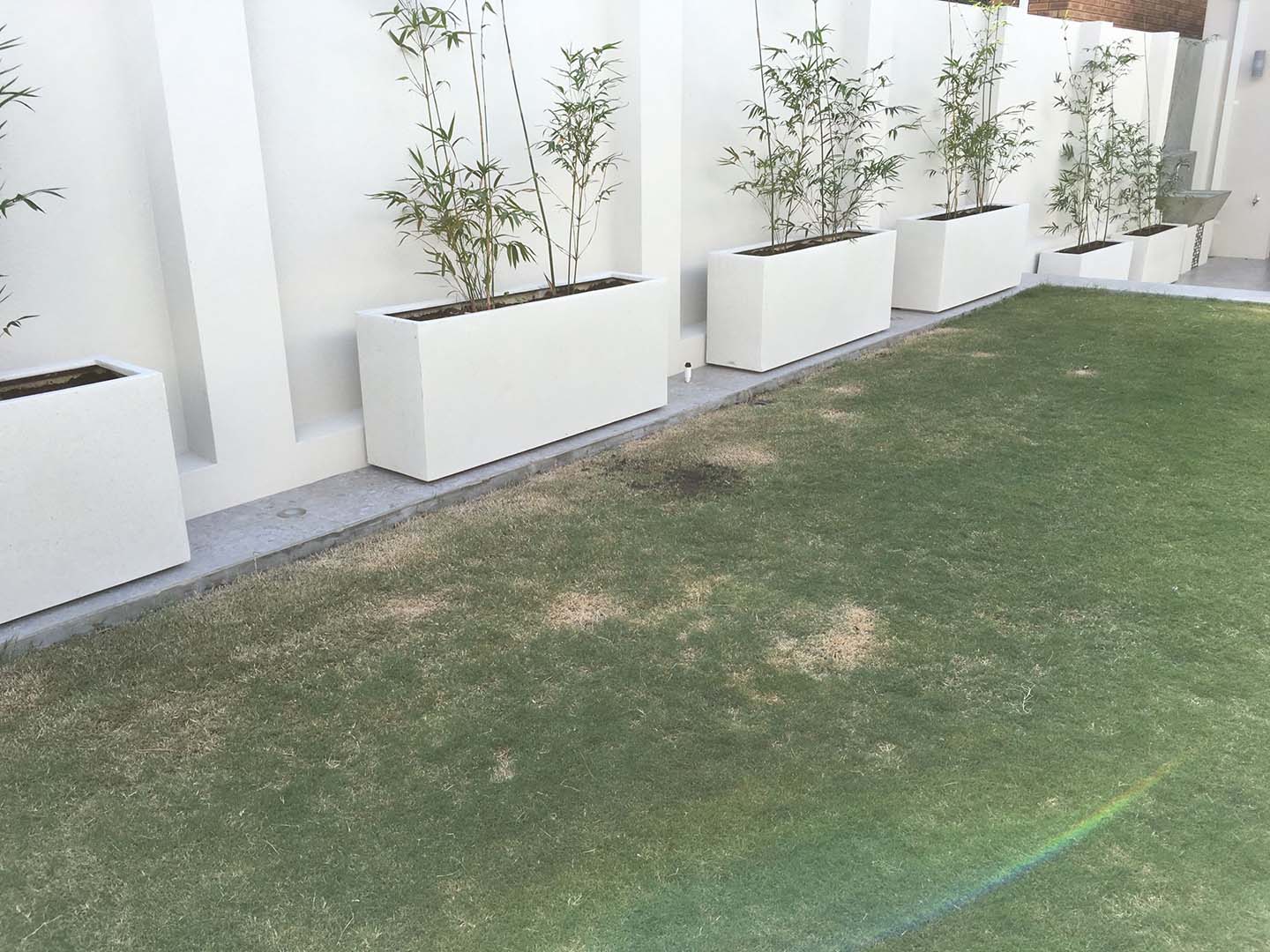
A box two metres long, filled with damp growing media, pushes outward along its whole length. That steady lateral load is what pulls a long planter out of shape, and it is the reason every size here is built with reinforcement running both horizontally and vertically through the sidewall. The long panels stay plumb and straight as roots fill the profile. The clean rectilinear shape then does honest work along a courtyard perimeter, a commercial streetscape, or the edge of an alfresco dining zone, where holding a straight line matters more than any silhouette.
Polystone Resin gives these containers the visual weight and tactile feel of carved masonry without the handling weight of solid precast concrete. The composite is water-resistant in itself, so there is no internal waterproofing sealer to paint on before soil goes in. Where pre-moulded feet are included, they come out of the base mould with the pot and lift the floor clear of the pavement, leaving an open air gap underneath: drainage holes stay open and moisture does not sit beneath the base.
Stock sizes run 200 x 50 x 50, 150 x 50 x 50, 100 x 50 x 50 and 50 x 50 x 50, which covers most runs without anyone having to improvise. When a planter has to meet joinery or fill an exact opening, we manufacture to your project dimensions, so send the measurements through with the setting-out. View the Polystone Resin collection for the rest of the family, or contact us about a product or project to talk through custom fabrication and trade supply.
Which screening plants hold up in the 200 x 50 x 50 trough?
At 50 cm wide and 50 cm deep there is enough soil volume for dense hedging species. Syzygium (lilly pilly), clumping bamboo (Bambusa gracilis), Viburnum tinus and pleached ficus all root strongly in this profile and knit together into an acoustic and visual screen along a suburban boundary fence.
Why is the reinforcement run in two directions?
Saturated potting media in a container spanning 200 cm puts real hydraulic and mechanical force on the long faces. Reinforcement bands embedded in the Polystone matrix, running across and down, resist that deflection and keep the side panels from bulging outwards over the years.
What order do the drainage materials go in?
Check first that every base drainage hole is clear. Lay strips of drainage cell or coarse drainage aggregate along the bottom channel, cover that with commercial non-woven geotextile fabric so soil cannot migrate down into it, then fill with an open-structured potting mix that keeps draining freely under automated drip irrigation.
Do the pre-moulded feet change anything on paving?
They do. The feet hold the underside off the pavement and keep a continuous air gap there, so the base drainage holes never seal themselves against smooth stone or concrete. Standing water stays off alfresco tiles, and after heavy rain the runoff clears quickly instead of pooling under the pot.
Does the stone-textured surface need any particular cleaning routine?
Not much. The stone-like texture holds fine dust in its grain, so a soft sponge with warm water and a mild detergent, run over the panels now and then, is enough to lift traffic grime, garden dust or mineral splash. Keep wire brushes, abrasive pads and solvent cleaners off it, because they burnish flat patches into the texture that cannot be put back.