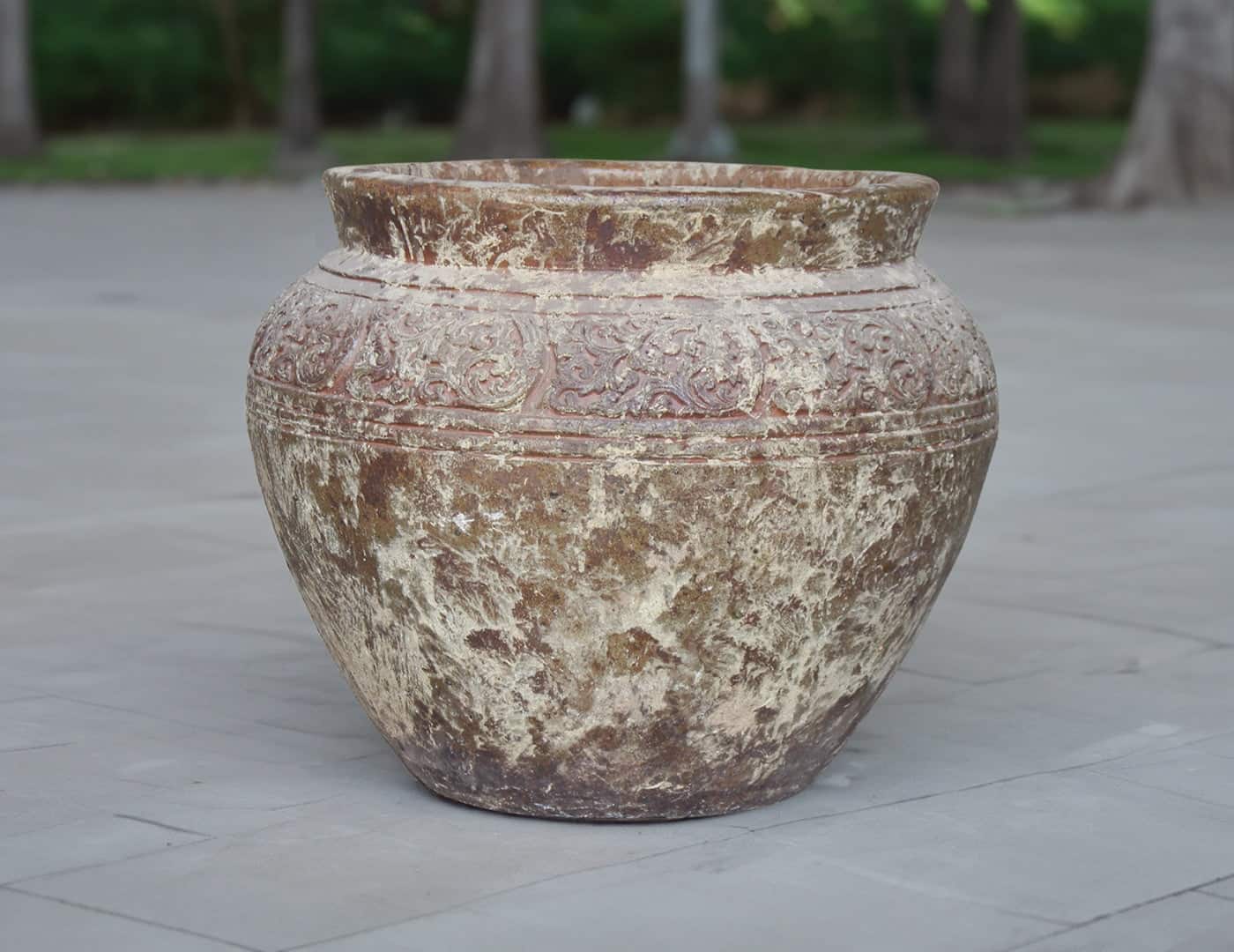
About Alicante Urn
Thick high-fired terracotta walls do two jobs at once here. They hold the root zone at a steadier temperature than any thin-walled pot manages through a Perth summer, and they give the urn the weight it needs to stay where you put it. The pigmented exterior reads as a deep earthy clay tone, which is why it sits well behind flowering colour, silver foliage and dark clipped greenery, and it does not wash out under Western Australian sun.
The planting bowl is broad rather than narrow-necked, so a root ball goes in without a fight and comes out again years later the same way. Under it there is real soil volume for sustained growth, and the natural breathability of clay keeps the mix oxygenated rather than sour. On exposed paving, in a courtyard, or along an alfresco veranda, the wide base and the mass of the clay body act as ballast on their own.
Two sizes, two different jobs:
- AT/72-0602 (72 x 60): the feature size, sized for mature citrus, a weeping standard rose, an ornamental palm, or a single point to work a courtyard around
- AT/45-0602 (45 x 37): mid-scale, for flanking a doorway, stepping down a run of garden steps, or framing an outdoor entertaining setting
Order the mix before the urn arrives, not after: work the volume out with the potting mix calculator for whichever size you have chosen. If you are still comparing shapes, view the Urns collection.
What goes under the urn on paved areas?
Terracotta pot feet, or anything that lifts the base clear. The drainage hole needs an open air gap beneath it so irrigation runoff leaves the pot instead of sitting against the roots, and that same gap keeps mineral moisture marks off limestone and pavers.
Which size suits which planting?
AT/72-0602 carries the root depth for an advanced ornamental tree or deep-rooting perennials. AT/45-0602 holds enough mix for mixed flowering annuals, a clipped buxus sphere, or succulents with a strong silhouette.
Will the pigmented surface need sealing or re-coating?
No. The pigment is bonded into the clay during high-temperature firing, so there is no coating sitting on top to flake or peel. Weathering softens the patina slowly, and most people come to prefer it that way. Leave chemical sealants off it. For cleaning, brush the textured surface dry first to lift dust out of the clay, then go over it with a soft sponge and plain warm water; scouring pads and solvent cleaners will scuff the pigment.
Does it stay upright in coastal wind?
Yes. A wide flat base and the heavy mass of thick terracotta hold against a strong sea breeze, where a lightweight plastic or thin composite container tips. Planted and watered it is heavier again, so set it in its final position first and fill it there.