
About Cuban Planter
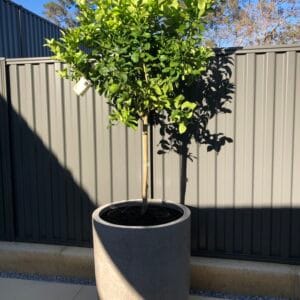
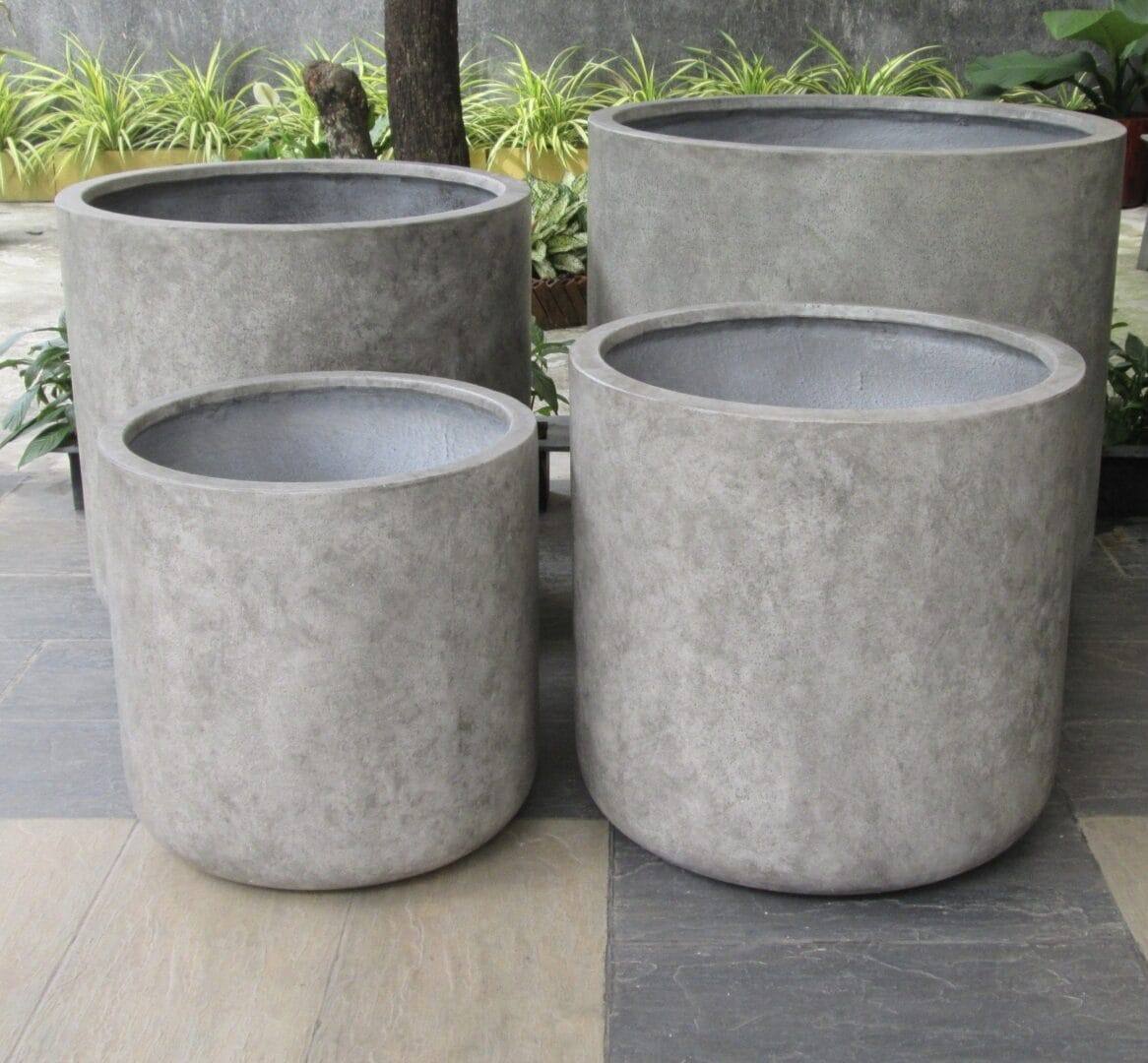
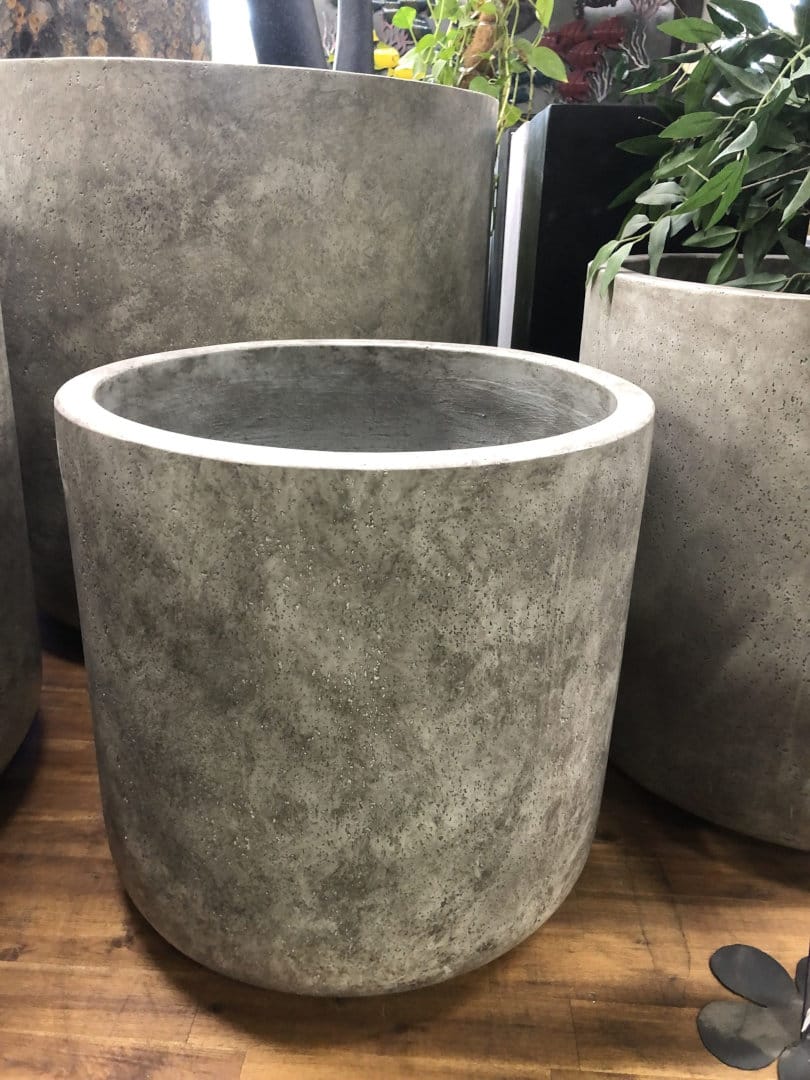
Matted fibreglass laid over a cement core gives this cylinder the hand-feel and visual weight of masonry without the mass that normally comes with it. You can lift one onto timber decking, wheel it across a paved courtyard or stand it in an interior foyer, and the wall still reads as stone when someone touches it.
Sizes step up in four increments, from LS3024/51 at 53 x 51.5 through to LS3024/80 at 84 x 80.5, which covers a single specimen planting, a screening run along a boundary, or a stepped cluster of three. Fused Grey carries a fine texture across the surface; Cimstone White sits flatter and cleaner. If neither suits the scheme, we spray to a Dulux Weathershield Low Sheen colour on request.
The rest of the Light Stone Planters share the same finishes, so a group can be built across shapes rather than sizes alone. Before ordering media for the 73 x 69.5 or the 84 x 80.5, work the volume out on the potting mix calculator — cylinders this deep take more bags than most people allow for.
What goes into the base before the potting mix?
Check the base drainage opening is completely clear of debris first. Lay synthetic drainage mesh over the hole, add a layer of coarse aggregate so the aperture stays free-flowing, then backfill with an open, free-draining container mix chosen for the plant.
Does the cement core make any difference to roots through a hot summer?
Yes. The fibreglass and cement core acts as an insulative barrier, slowing direct heat conduction from radiant afternoon sun. Root zone temperatures stay more moderate on hot days and soil moisture holds longer than it does in an uninsulated single-skin plastic pot.
Do I need to ballast it for a tall specimen?
For upright shrubs or wind-exposed positions, yes. Put a 10 cm layer of washed river pebbles or blue metal aggregate in the base before the potting soil goes in. That weight sits low and holds the vessel steady against coastal gusts on open patios and balconies.
Can one of these stand on a finished indoor floor?
Indoors on polished timber, tiles or carpet, leave the specimen in its plastic nursery pot and sit a heavy-duty waterproof drip tray inside the base. Irrigation runoff is then caught inside the planter rather than reaching the floor.
Cleaning the Fused Grey texture versus the Cimstone White — is it the same job?
Not quite. Fused Grey holds garden dust in its texture, so brush the surface dry with a soft hand brush before anything wet touches it, then wash with warm water and a neutral pH household detergent. Cimstone White is a flatter surface that shows water spotting and hand marks more than dirt, and a damp cloth usually handles it. Rinse both with fresh water so detergent does not dry on the finish, and keep scouring pads and solvent cleaners away from either.