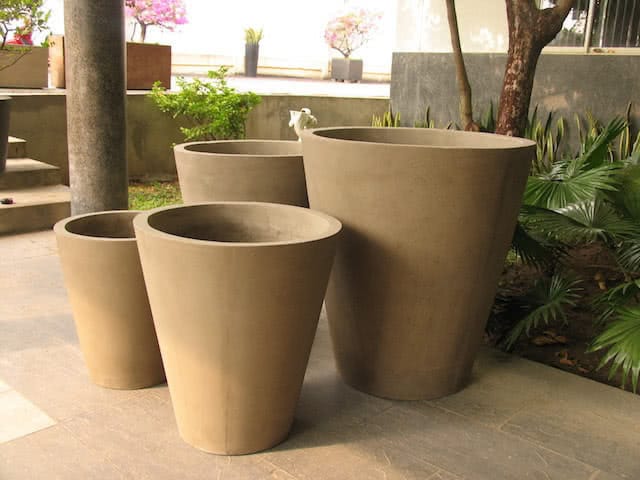
About Lightweight Cone Planter
| Product Code | Size (cm) | Weight |
|---|---|---|
| FS6000L/75 | 75W x 82H | 28 kg |
| FS6000L/65 | 65W x 72H | 18 kg |
| FS6000L/55 | 55W x 62H | 12 kg |
| FS6000L/45 | 45W x 52H | 7 kg |
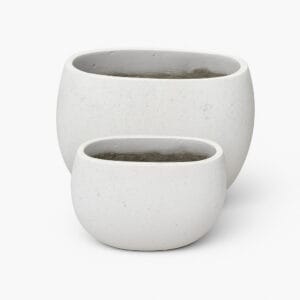
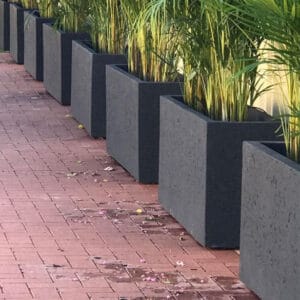
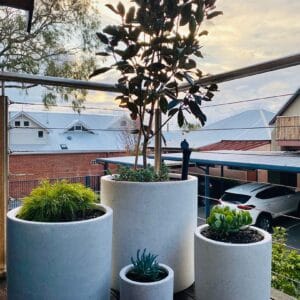
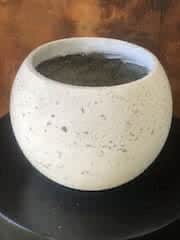
The Lightweight Cone Planter combines a modern tapered conical profile with the practical handling advantages of a fibre cement and stone chip composite. The integrated stone aggregate creates a tactile, faint terrazzo surface, while the composite construction maintains a manageable tare weight that simplifies transport, installation, and repositioning across residential terraces, entry porticos, and commercial courtyards.
Designed with an unlipped, rimless top edge, the vessel allows established root systems and nursery containers to slide smoothly into place without catching on interior rims. Each planter is pre-treated with a protective waterproofing seal to safeguard the composite matrix, while factory-drilled base drainage holes allow surplus irrigation to escape readily during heavy rainfall.
Available in four proportional sizes ranging from the compact FS6000L/45 up to the substantial FS6000L/75, the series offers versatile options for standalone specimen planting or tiered architectural pairings. Browse related designs in our Light Stone Planters range, explore our broader garden pots and planters selection, calculate container media volumes with the potting mix calculator, or contact us about a product or project for Malaga showroom stock and freight advice.
What is the recommended drainage layering for the Cone Planter?
Cover the pre-drilled base drainage hole with synthetic fibreglass flyscreen mesh, add a 10 cm layer of 20 mm blue metal aggregate across the bottom, place a second layer of flyscreen over the stone, and fill with quality container potting mix. This layering prevents potting media from washing out while maintaining clear drainage passages.
How do you stabilise the tapered cone profile in windy outdoor positions?
Because the planter tapers towards a smaller ground base, the lower aggregate drainage layer doubles as structural ballast. Incorporating 20 mm blue metal aggregate in the base significantly lowers the centre of gravity, anchoring the container on exposed balconies, patios, and open poolside decks.
How does the fibre cement composite perform during Perth summer heatwaves?
The blend of fibre cement and dense stone chips creates a thick, insulating wall structure that buffers plant roots against rapid temperature fluctuations. While raw plastic pots transfer radiant heat quickly to root balls, the light stone matrix slows thermal transfer, reducing moisture stress on sunny paved surfaces.
How do you configure the Cone Planter for indoor timber or tiled flooring?
For indoor use, keep the plant potted within its plastic nursery container and position a heavy-duty waterproof saucer inside the base of the cone planter. This catches runoff without requiring drainage holes to be sealed, preventing moisture damage to floorboards or carpets.
What is the best method to clean and maintain the terrazzo finish?
Rinse exterior surfaces with clean water and gently scrub with a soft-bristle brush and mild neutral liquid soap to clear accumulated dust and airborne grime. Avoid harsh acid washes, bleach, or high-pressure spray wands, which can degrade the factory waterproofing seal and pit the stone finish.