About Nova Urn
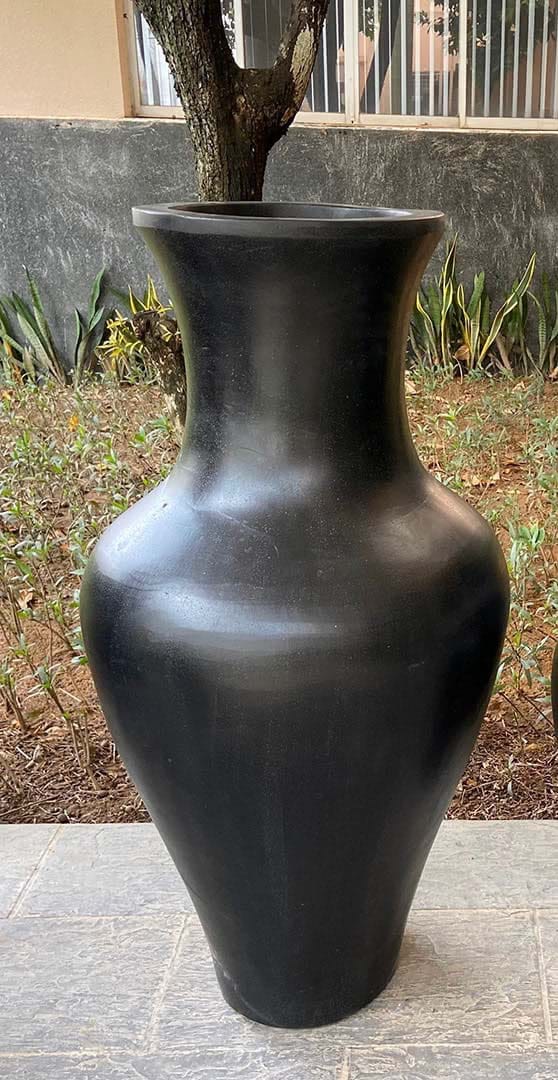
Height without footprint is the point of this one. It stands 120 cm tall on a 60 cm diameter, so a planting sits close to eye level at a residential front entry, along a garden pathway or on a paved alfresco terrace, while the base stays narrow enough to leave the walkway clear. Customers measure the path first and the pot second — this profile usually survives that test.
Marine-grade fibreglass is the reason it can live outdoors year round. It holds its shape through direct sunlight and seasonal winter rain, and it carries far less weight than a concrete urn of the same size, which matters on tiled terraces and upper-level paving. Plant it with spilling blooms and trailing foliage, or leave it unplanted: the classical contours read as sculpture on their own, which is how most of them end up — in pairs, flanking a doorway or standing on gate posts.
Work out the soil volume before you buy the bags — a vessel this tall takes more mix than most people estimate. Calculate potting mix, or view the urn collection to compare it against the lower profiles.
Which plantings suit a vessel this tall?
Two directions work. Spill the edge with flowering annuals such as petunias and geraniums, or trailing dichondra, so the colour breaks the rim line. Or go upright with a standard rose, a topiary sphere or a dwarf conifer, which carries the vertical symmetry further instead of fighting it.
Will it stay put on an open, windy patio?
At 120 cm it needs ballast. Load a 15 cm layer of dense blue metal aggregate or river pebbles into the lower base before you add mix. That drops the centre of gravity low enough to hold the urn steady through sudden gusts on exposed paving.
Anything to do with the drainage hole before potting up?
Check the base opening is completely clear first. Lay a piece of synthetic flyscreen mesh over the aperture to stop mix washing out, cover the mesh with coarse drainage gravel so water keeps moving, then backfill with an open-draining container potting mix suited to what you are planting.
Does it work empty?
Yes, and plenty of people buy it that way. The balanced proportions and classical contours give it enough form to stand alone, adding height and structure to a courtyard corner or the end of a garden sightline with nothing planted in it.
Cleaning the fibreglass finish — what does it need?
Very little. The fibreglass surface is sealed, so garden dust and sprinkler spotting sit on top rather than soaking in. A low-pressure rinse from the garden hose lifts most of it; for the rest, a soft sponge with mild neutral liquid soap and then a rinse off. Keep abrasive scouring pads and harsh chemical cleaners away from it, as both will dull the finish.