About Atlantis Urn
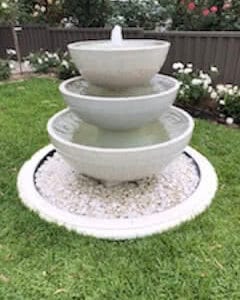
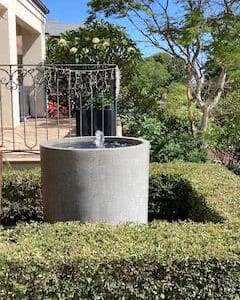
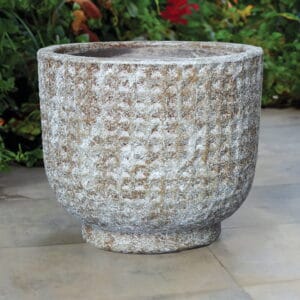
Recessing the reservoir below the ground plane is the whole idea here. With only roughly 100 mm of the basin rim left visible, your eye goes to the weathered Atlantis pottery and the water breaking over its shoulders, not to a tub standing proud of the garden.
That exposed rim is retained by 100 mm galvanised Straightcurve steel edging, bent into a clean circle. It does two jobs at once: it holds the decorative river pebbles flush with the rim, and it keeps lawn grass, mulch and soil runoff on their own side of the line.
Water runs down the urn, filters through the pebble layer, and is drawn back up from the concealed basin. If you are carrying the same edging profile through a longer garden run, check the sizes on our garden edging solutions in Perth page. To compare it against other recirculating designs, view the water features and fountains collection.
Common questions
Why leave 100 mm of the basin showing instead of setting it flush?
Those 100 mm of basin, plus the galvanised Straightcurve border sitting on top of it, work as a kerb. Mower clippings, bark mulch and the muddy runoff that comes with heavy rain stop at the steel rather than washing into the pebble bed and clogging the pump intake.
What sits under the basin, and how deep does the pit need to be?
Dig to the height of the basin plus 50 mm for a compacted bedding sand layer. Bed the basin down onto that sand and check it with a spirit level before you backfill. Get it level and water sheets evenly down every side of the urn; leave it out by a few millimetres and the spill favours one face.
Can the pump be reached without pulling the feature apart?
Yes. The support grate under the pebbles has an access hatch built into it. Sweep the surface pebbles aside over the hatch, lift the pump out, rinse the intake filter, and drop it back. The urn itself never moves.
Through a Perth summer, how often does it need topping up?
Look at the reservoir level every two to three days once the heat sets in. Top up by running a garden hose straight over the pebble bed. The one rule that matters is keeping the pump fully submerged at all times.