About Crucible Planter
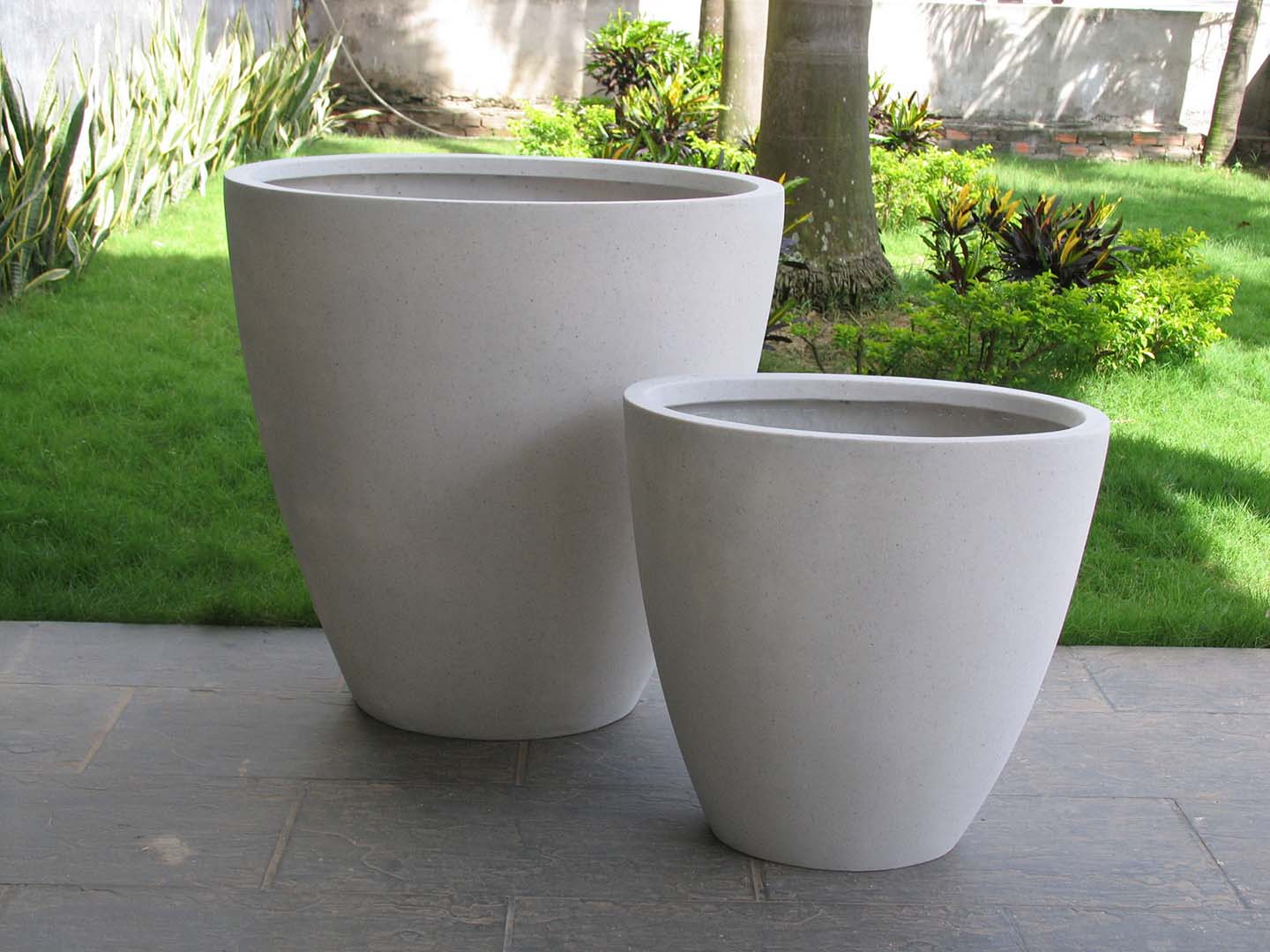
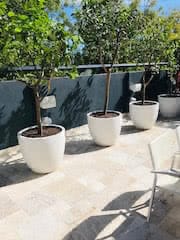
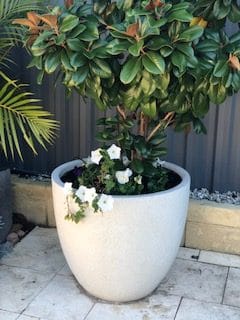
Width exceeds height here, and the full diameter runs down to a flat bottom rather than tapering away. That is the difference between the Crucible and the egg-shaped or tapered vessels standing next to it: more soil across the lower root zone, and a low centre of gravity that holds steady when an open courtyard or terrace funnels a coastal wind. It is a pot for specimen trees and vigorous shrubs that would sit top-heavy on a narrow base.
The blend is Polystone Resin infused with natural stone chip, a composite that resists water in itself, so there is no internal waterproofing membrane to paint on before you pot. Underneath sits a concealed rubberised anti-vibration square, mounted so the drainage aperture stays just clear of the floor. Irrigation water runs away freely instead of pooling against sealed paving, and the pot stops chattering on polished alfresco tiles.
Three sizes run the series: CG5008L/70 (70 x 61), CG5008L/60 (60 x 53) and CG5008L/50 (50 x 46). In practice that covers specimen olive trees, Japanese maples and the wide architectural agaves people ask for most. Matching saucers are made to suit, or fit self-watering inserts if the planting sits somewhere nobody will water it daily. To match profiles across a whole scheme, view the Polystone Resin Planters collection.
Crucible or Egg Planter — which shape suits root development better?
Full diameter down to a flat base puts considerably more soil across the lower root zone, which is exactly where a tree or a spreading shrub wants to travel. An egg profile narrows in at that depth, so roots circle and eventually bind. The flat bottom also carries the weight of the mix low in the pot, giving a top-heavy specimen ballast it will not get from a narrower base.
With a flat base sitting on paving, where does the water actually escape?
Through the base hole, which the rubberised pad keeps clear of the ground. The pad is mounted directly under the centre of the base, so the hole never seals itself against smooth concrete or paving the way a flat-bottomed pot otherwise can. Water exits unimpeded, roots avoid waterlogging, and there are no visible pot feet to work around.
Can a self-watering insert be fitted to this planter?
Yes. The insert sits inside the base beneath the potting mix and works as a sub-irrigation reservoir. Capillary action draws water upward into the root zone as the mix dries, which cuts watering frequency noticeably through a hot summer stretch while avoiding the over-saturation you get from simply watering more often.
Which potting mix and preparation suits a large tree in one of these?
A high-grade, coarse-structured potting mix with a wetting agent and slow-release fertiliser worked through it. Lay a square of synthetic geotextile mesh over the drainage hole to hold the media back, then fill straight into the container. No interior waterproof coats are needed first.
Does the stone chip surface need more than a hose?
Rarely. Rinse dust and garden debris off the walls with a gentle garden hose, or go over the surface with a damp cloth and a little mild liquid soap where it has marked. Because the chip is infused through the resin rather than applied as a coating, the texture does not rub away with cleaning, and the finish is UV-stable — no polishes, sealers or harsh chemicals.