
About Diva Low Bowl Planter
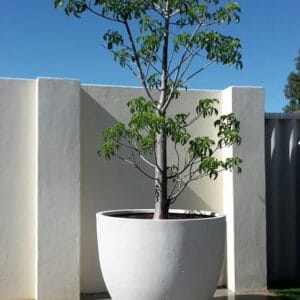
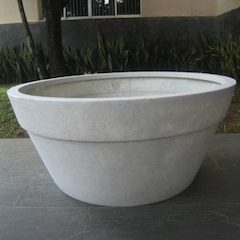
Root systems that run sideways are the reason this shape exists. At 100 x 45, the Diva Low Bowl (CG5022/100) sets 450 mm of planting depth over a 900 mm-wide base, so a spreading specimen gets the soil width it actually uses rather than a deep column it never reaches. The wide flat base is also what keeps it seated on paving once the mix is wet.
Polystone Resin does the hard work here. It sits through direct sun, rain and daily garden watering without cracking or surface breakdown, which is more than most wide-mouthed vessels manage in a Perth summer. Across that open surface you have room for a mature agave, a clumping cycad, bird of paradise, or a mixed succulent planting worked out from the centre.
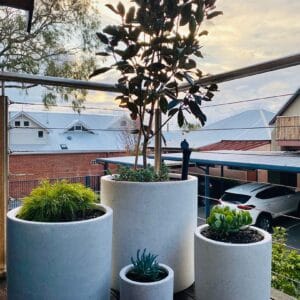
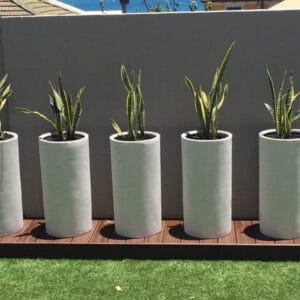
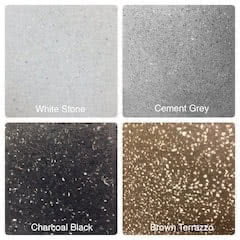
White, Cement Grey and Charcoal Black are the three finishes. In a courtyard the low bowl usually goes in alongside taller upright containers — same material, same finish, different heights — and those live in the Polystone Resin collection. If you want this profile in another size, the Diva Planter range carries all five.
What should I plant in 450 mm of depth?
Anything with fibrous or spreading horizontal roots. Agave attenuata, Sansevieria trifasciata, dwarf date palms, bird of paradise (Strelitzia reginae) and cascading groundcovers all hold well at this depth, because none of them are chasing a deep vertical root run.
Is it stable enough for a paved courtyard?
Yes — the 900 mm base spreads the soil weight across a wide contact area instead of concentrating it on a narrow foot. On outdoor tiles, stone terraces or a level concrete footing it sits flat and stays put. Check the surface is level before you fill it; a low bowl shows a lean more than a tall pot does.
What goes in the bottom before the potting mix?
Start by checking the drainage outlets in the base are clear of debris. Lay permeable geotextile fabric over the aperture, then 30 to 50 mm of coarse drainage aggregate, then an open-structured potting mix suited to low bowls and succulents. Shallow vessels hold water longer than deep ones, so the open structure matters more here than usual.
Does Charcoal Black get too hot for roots in a Perth summer?
Dark surfaces do absorb more solar radiation, but the dense composite walls of Polystone Resin slow heat transfer into the root ball. In exposed afternoon sun, top the soil with a light-coloured pebble or pumice mulch — it deflects direct heat off the surface where the shallow roots sit.
Does the Polystone Resin surface need sealing or special cleaning?
No sealing. Hose the outside down and wipe it over with a soft sponge; if sprinkler splash has left marks on the White finish, warm water with a little mild biodegradable detergent will lift them. Keep abrasive powders and solvent cleaners off it — they dull the factory finish, and on a bowl this wide the patch will show.